
Email This Post Email This Post
Home » Dave Lewis Diary, Headline, TBL News

ZEP IV COVER IMAGE SOLD AT AUCTION FOR £16,000/ LED ZEPPELIN PHYSICAL GRAFFITI 51 YEARS GONE/MORE BECOMING LED ZEPPELIN ONE YEAR GONE/DL DIARY BLOG UPDATE
26 February 2026 45 views No Comment

This story has had a lot of media coverage this week – report below via the BBC News website:

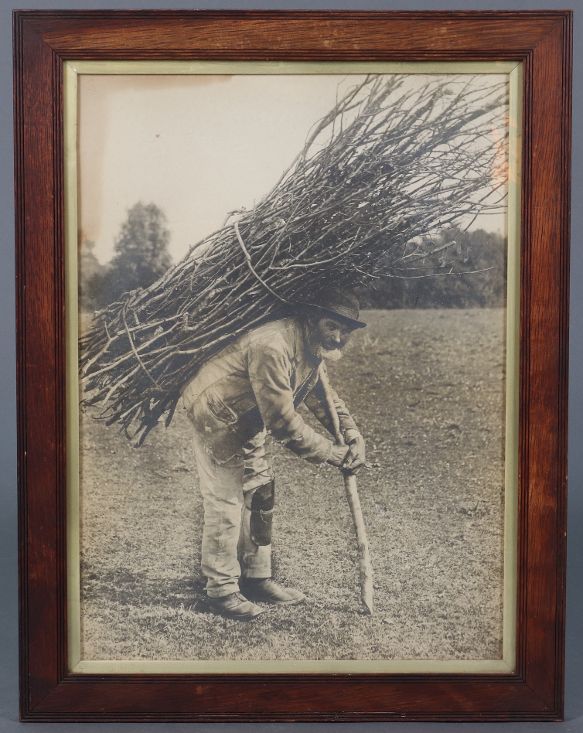
A “real one-off” photograph which inspired the album cover of Led Zeppelin’s fourth album has sold for £16,000 after a transatlantic bidding war.

A Victorian image of thatcher Lot Long, from Wiltshire, is believed to be the original frame behind the cover art of Led Zeppelin IV, which included the rock band’s hit Stairway to Heaven.

The print of the picture, said to be the largest and best quality example found to date, sold for nearly £15,000 more than it was originally listed for when it was auctioned in Horsham, West Sussex, earlier.

Leo Denham, managing director of Denhams auctioneers, said: “There has been a lot of interest from collectors in America and around the world.”

Denham added: “I am delighted to have sold such a significant piece of music history and got such a great result for the seller.

“The new UK-based buyer is very pleased with his purchase, where it will take pride of place in his collection.

“It’s a real one-off in music memorabilia.”

Denham said “fierce bidding” between prospective buyers in the UK and America had driven the price up.

The origins of the image of Lot Long were first uncovered by Brian Edwards, from the University of the West of England (UWE), in 2023, and the earliest known example of the image is owned by Wiltshire Museum.

Denham said the 19th Century print, taken from the original negative of the image, is the largest of its kind.

Art consultant Tim Williams said: “Two of the known surviving prints are of poor condition and quality but this is the sole known example in the larger size of 60.8 x 44.4cm (29.3 x 17.4 inches), rendering it unique in scale and rarity.

“Its survival in this size places it among the most important examples associated with the Led Zeppelin album imagery”.

See more at:

https://www.bbc.co.uk/news/articles/cq6q8q8lmrro

——————————————————————————————————————————————

Physical Graffiti – It was 51 years ago…

DL/TBL Physical Graffiti throwback…celebrating the release of Led Zeppelin’s Physical Graffiti 51 years ago..
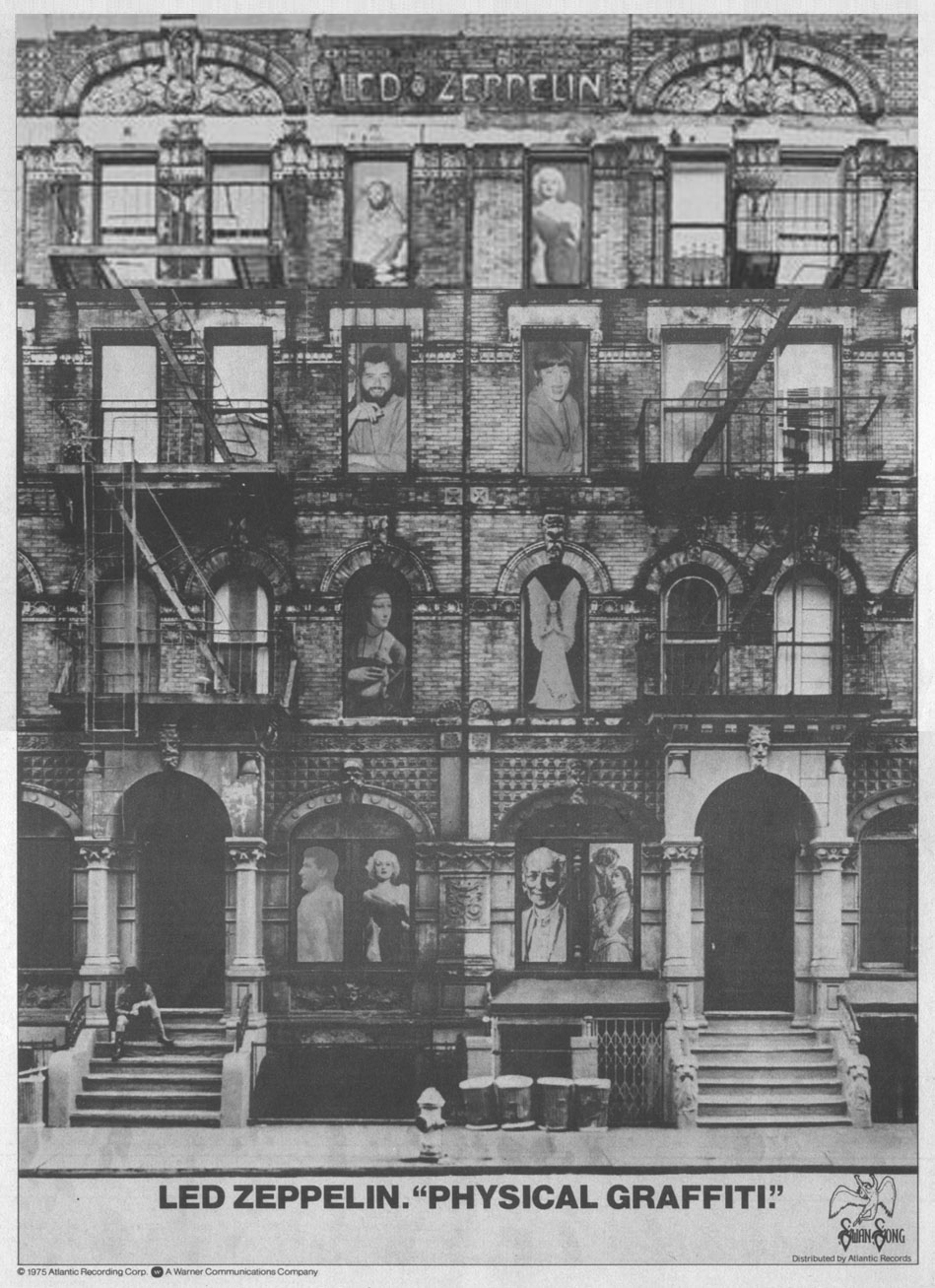
Some thoughts on what Physical Graffiti means to me 51 years to the week it was released back in February 1975.
I was a mere 18 years old and learning about life with every waking day…
I was obsessed with music (still am!) and no more so than the music than that created by my favourite group Led Zeppelin.
The previous October I had been lucky enough to secure a dream job – working in the record department of our local WH Smiths – I absolutely loved it – talking about records, handling records, filing records ,odering records, selling records…
It was a timely entry into a profession I would spent a glorious 35 years in not least because Led Zeppelin had a new record due out. I of course knew all this as I had been following the story in the music press for the past year.
It was to a double album known as Physical Graffiti. In November the WEA record company rep who called on the shop showed me a mock up of the cover he was using to sell the album in.
My then manager Dorothy a lovely lady in her 40s was quite taken with my obsession with this group and asked my opinion – I of course replied it would be a very big seller. Our order of 50 copies was placed.
Then there was the waiting. Ah yes the waiting. Initially it was set for November 29th 1974. That date passed and nothing. Then it was going to be January 10th 1975 and so it went on until finally on a grey February morning, I took receipt of the record boxes delivered that day at WH Smith where I worked. And there in a parcel marked WEA/CBS Distribution was a box full of that beautiful double album.
Had it out of the box immediately – took it down the pub lunchtime to show everybody.
Oh yes this was the big one – a massive outpouring of new Led Zeppelin music.
It ushered in a memorable year that would peak with those five glorious days in May when for twelve hours over two weekends at Earls Court, I was able to view Led Zeppelin live in all their magnificence.
Since then Physical Graffiti has been a constant in my life. Not long after its release, the WEA rep who called on WH Smith where I worked kindly gave me the original sleeve artwork mock up which still takes pride of place in my collection. On holiday in Spain that year I could not resist handing over a pocket full of pesetas for the Spanish pressing. I have it on cassette and 8 track cartridge and a fair few pressings from various countries.
When I first got a CD player in 1988 it was one of the first CDs I purchased. The emergence of the Tangible Vandalism rehearsals bootleg in the early 80’s was a shot in the arm in a less than vibrant Zep period, and the first time I heard the 33 minutes of outtakes that surfaced in 1997 remains one of my most memorable listening experiences.
There have also been numerous live Graffiti special moments…
Selections from Physical Graffiti played live over the years have also provided some of my all time fave gig going moments.
Ten Years Gone and Sick Again at Knebworth, Trampled Underfoot at Leicester University in ’88, Kashmir at the MTV Unledded filming, The Wanton Song at Later With Jools ‘98, Night Flight at the ULU in ’98 , In My Time of Dying at the 02 Reunion.
In today’s internet driven social media world of instantly accessible everything, it’s easy to forget the impact a mere record could have.
A mere record? Physical Graffiti could never be a mere anything.
It’s a living breathing, masterpiece.
So happy 50th Birthday Custard Pie, The Rover, In My Time Of Dying, Houses Of The Holy, Trampled Underfoot, Kashmir, In The Light, Bron Yr Aur, Down By The Seaside, Ten Years Gone, Night Flight, The Wanton Song, Boogie With Stu, Black Country Woman and Sick Again.
These 15 performances continue to enrich my life and countless other Led Zeppelin fans across the globe….
They are, were and always will be the best…

TBL ’75 Snapshot Retro Review 1:

Jaan Uhelszki, Creem, 1975

ROCK’S BIGGEST bruisers, Led Zeppelin, have got another album. In rock chronology this is an Event, since the defending champions of the world’s biggest rock ‘n’ roll draw have released only six albums in the past seven years. In fact, we’ve spent eighteen excruciating months between products, pacifying ourselves with heavy rock’s second prizes – Deep Purple, Blue Oyster Cult, and BTO. And these heavy metal hitmen couldn’t begin to plug up the leaks Led Zep left when they took on an extended, self-imposed exile to some musicians’ netherworld.

Now, just as cold turkey has begun to lose its chill. Zep are back with a package deal: a double album and an American tour. The announcement provoked unchecked carnage in the under-eighteen age group, primarily directed at long black limousines, uniformed adults, and popcorn sellers. Throngs of potential ticket-buyers foamed with anticipation, their palms growing sweaty, their eyes glassy.

Days passed without the appearance of Physical Graffiti. Then the first shipment arrived late one Thursday. The fans descended on Marty’s Records downstairs from CREEM like dragonflies, clustered around the cash register, furtively clutching the album to their heaving bosoms, slobbering and drooling down the shrinkwrap. Worried parents contemplated a vaccine, but once Physical Graffiti touched the turntables the mysterious malady subsided. The stricken nodules were lulled into a state of tympanic euphoria.

Physical Graffiti can stand on its own historically without the support of Zep’s five other million sellers, but inevitably the cuts on this album will be scrutinized with Nancy Drew-like precision in search of a successor to ‘Stairway’ or an equal to ‘Rock and Roll.’ Graffiti is, in fact, a better album than the other five offerings, the band being more confident, more arrogant in fact, and more consistent. The choice of material is varied, giving the audience a chance to see all sides of the band. Equal time is given to the cosmic and the terrestrial, the subtle and the passionate.

The exotic and musky ‘Kashmir’ is intriguing in its otherworldliness. Jimmy Page’s grinding, staccato guitar work sounds like a cosmic travelog to spiritual regeneration, swelling around the lyrics, which are heavily laden with mystical allusions and Hessean imagery. Although ‘Kashmir’ is certainly the best cut on the album, it could be trimmed without losing any of its mesmeric effect, because at some point the incense grows a little murky, and the slow burning guitar degenerates into opulent cliches, causing the instrumental interludes to echo an Exodus soundtrack.

Not all of the cuts are exercises in advanced audial basketweaving, but trace a musical cycle running from Page’s grandiose productions to basic drunken boogie. ‘Trampled Underfoot’ is seemingly effortless funk that is rescued from mediocrity by the elaborate punctuation of Page’s guitar. His fingers traverse the neck of his instrument with a velocity so violent that only a machine could improve upon it. Each batch of notes he pulls from his guitar is uniquely his own, personal as a thumbprint. Just as unique are Plant’s laments and his sexual heaves and sighs that turn the lyrics of a simplistic rocker like ‘Wanton Song’ into an introspective, personal statement. ‘Custard Pie’ and ‘Boogie With Stu’ are macho masterpieces in the tradition of the strutting, swaggering English flash blues formula pioneered on Zeppelin’s early albums. ‘Night Flight’, ‘Sick Again’ and ‘Ten Years Gone’ smack of pop picaresque, much in the manner of Rod Stewart’s ‘Every Picture Tells a Story’ – vignettes and transient insights, slices of a popstar’s life.

Led Zeppelin moves in strange ways. Sure they’re gutsy, ballsy, and flamboyantly aggressive, always spiked with a lot of eroticism, but they’re also cerebral…by way of the glands. They have this unique ability to wind you up and prime you for a full-throttled tilt. You rocked, you rolled, and oh mama those juices flowed – but you also listened to the words.

Surprisingly, in an era where disposable bands and itinerant musicians constantly play a game of musical chairs, Led Zeppelin is a unit – the same four members for the past seven years. Their longevity is due to a kind of magnetism, magic if you will. That rare chemistry was evident even at their first rehearsal, where they fit together like jigsaw pieces, transcending their common R&B backgrounds to achieve a gut-wrenching new synthesis. Lisa Robinson describes it as a case in which “the Beatles battled the Stones in a parking lot and Led Zeppelin won.” Zeppelin make more noise, has more guitar gimmickry, more sexuality, more flash, and generates more violence than any of their competitors, so that they are more than mere musicians, simple superstars. They have become the longest-lasting model for those culturally bankrupt ‘trendies’ to follow. Underage masses walk, talk, dress and dope like Zep. They have become a necessary trapping for the terminally hip, as well as providing the audial backdrop for any social gathering.

A Led Zeppelin album is like a select invitation to a key club of rock ‘n’ roll, where the kohl eyed gypsy Jimmy Page is finally accessible through his smoky guitar solos. Robert Plant preens and moans, lusts and longs for lost memories…and takes you along. Like a sonic vortex, Zeppelin draws you into their private caprice, spiraling, coaxing your willing psyche into a suprasensory haven where you can taste and savor this dream stuff that superstars thrive on. This is not pop music, but a harder stuff, more heady and potent, like a round of whiskeys and coke. Zeppelin are avatars in a cultural vacuum.

© Jaan Uhelszki, 1975

 TBL ’75 Snapshot Retro Review 2:

Led Zeppelin: Physical Graffiti

John Tobler, ZigZag magazine March 1975.

NOW I SHOULD make clear in this context that I’m not by nature a fan of this band in the same way that I like Van Morrison or Love. My position is one of deep respect, mind you, and while I was heard to say some harsh things about Beck copyists, etc, when the first album came out, such notions no longer seem to apply. I feel that I would have to perform a masterpiece of justification if I wanted to put L.Z. down, and in all honesty, there’s no fuel for that particular fire.

I suspect that someone somewhere will go into that old thing about making one great album out of two flawed same, as used with the Beatles’ White Album and so on, but again, I can’t subscribe, and this is where the review really starts. There are fifteen tracks on display here, and three of them, accounting for about a third of the playing time, appeal to me so much that were they on one side of the record, I would find it difficult to play anything else until I knew them from every direction. Specifically, these are ‘In My Time Of Dying’, ‘Houses Of The Holy’, and best of all, in a class shared with only a dozen or so tracks in my entire musical existence, ‘In The Light’.

That’s not to write the rest off in a terse few words but for my part, the record would be breaking down fresh barriers if it was all as good. It’s a question of stand-outs, and if you can imagine putting ‘She Loves You’ on the first Beatles album, you’ll see what I mean. Without my three choice cuts, the album would be of very good quality. Perhaps a little routine, but certainly to be among the critics’ choices at the end of the year. With the tracks included, it gets a distinct lift off, and while it’s just as certain to figure similarly in critical and public polls, we’re all getting a bonus for which we should be grateful. I would say with certainty that prolonged playing will produce several more tracks which will become highly pleasing, but it all comes down to what makes the biggest initial impact. And that’s not to say that the three I’ve mentioned have a singalong chorus.

Beyond saying “Get it if you’re even vaguely into this type of confection,” there’s not much to add. Jimmy Page as producer has to be one of the most tasteful people there is, and he continually rejects the temptation to fall into Black Sabbath traps, He also plays the guitar with consummate brilliance, and perhaps that’s part of the key to Led Zeppelin. They are all musicians of the highest calibre, and the length of time taken to produce this package is a testimony to the fact that second best for them is as bad as nowhere. One for your lists.

© John Tobler via rocksbackpages.com

—————————————————————————————————————————————————

Facts Behind The Tracks:

To aide your listening enjoyment – as taken from the Led Zeppelin From A Whisper To A Scream book…

Custard Pie Page, Plant

As well as tapping the Bukka White songbook for the ‘shake  ‘em on down’ refrain, other sources of inspiration can be traced to Sonny Boy Fuller’s ‘Custard Pie Blues’, Blind Boy Fuller’s ‘I Want Some Of Your Custard Pie’ and Big Joe Williams’ version of the song, ‘Drop Down Mama’. This was the song’s working title.

Jimmy Page’s guitar solo is filtered through a then recently acquired ARP guitar synthesizer.

The Rover Page, Plant

This dates back to 1970, when it ’ was rehearsed as an acoustic blues piece before being recorded at Stargroves with Eddie Kramer for the fifth album. When it didn’t make the final ‘Houses Of The Holy’ selection, Page returned to it in 1974, overdubbing and re-mixing the basic track with Keith Harwood.

The curious “Guitar lost courtesy Nevison… Salvaged by the grace of Harwood” sleeve credit would appear to be a reference to certain mixing difficulties they may have had here – Nevison being engineer Ron Nevison.

In My Time of Dying  Bonham, Jones, Page, Plant

This was a traditional song totally reworked. A version can be found on Bob Dylan’s first album,. The lyrics include reference to Blind Willie Johnson’s Jesus Make Up My Dying Bed.

A stunning live delivery of this track drawn from their May 1975 Earl’s Court shows can be seen on the 2003 Led Zeppelin DVD

One the Companion Disc  there is a spacey initial rough mix of In My Time Of Dying.

Houses of The Holy Page, Plant

Left off the album of the same name  but  recalled for the double set. It retired no further re-mixing, having been tied up by Eddie Kramer as far back as the Electric Lady sessions in June 1972.  In order to create the layered guitar intro and fade, Jimmy used a Delta T digital delay unit.

The Companion Audio Disc  presents the Houses Of The Holy Rough Mix With Overdubs version.

Trampled Underfoot Jones, Page, Plant

This has a lyrical theme that highlight the workings of motor car and its relation with the sexual act, a theme explored by Robert Johnson in his 1936 recording ‘Terraplane Blues’. The working title for Trampled Under Foot was Brandy And Coke .

John Paul Jones’ clavinet contribution was inspired by  the use of the instrument  on Stevie Wonder’s Superstitious and Billy Preston’s ‘Outta Space’.

A special limited edition single coupling Trampled Underfoot with Black Country Woman was issued as a promotional tool in the UK at the time of their five Earls Court shows in May 1975.

In the US, Trampled Underfoot was released as a single reaching number 38 on the Billboard chart.

An initial rough mix of Trampled Underfoot under the working title of Brandy & Coke can be heard on the Companion Disc.
Olympic 10

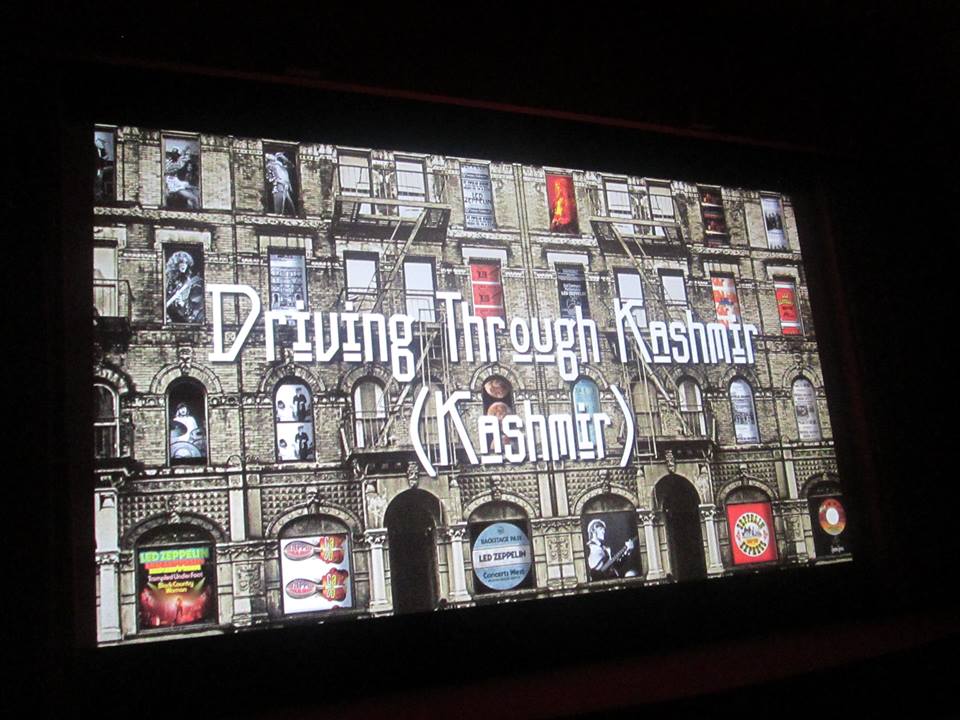
Kashmir Bonham, Page, Plant

This was initially demoed in instrumentals form with John Bonham in late in 1973.

Robert Plant wrote the lyrics on the road to Tan Tan while holidaying in South Morocco immediately after the 1973 US tour, it was initially titled ‘Driving To Kashmir’

It enjoyed further success in 1998 when Page utilized the basic riff of ‘Kashmir’ for collaboration with rapper Puff Daddy. This new version used on the Godzilla soundtrack reached number 2 in the UK singles chart.

This arrangement has been much deployed as TV and radio background link music notably on the UK X Factor TV show.

Kashmir was the grand finale at the Led Zeppelin reunion staged in tribute to the late Ahmet Ertegun on December 10th, 2007.

Jimmy Page can be seen performing and explaining how the song came together in 2008 on a soundstage in front of Jack White and The Edge for the It Might Get Loud documentary film.

A rough orchestra mix  under the working title of Driving Through Kashmir can be hard on the Companion Audio Disc.

In The Light Jones, Page, Plant

Another creation that was honed down from various ideas. Rehearsal versions offer alternate lyrics such as ‘ In The morning’ while another rehearsal take leads with the refrain ‘Take Me Home.’ A work in progress version titled  Everybody Makes It Through  (In The Light Early Version/In Transit) can be  heard on the Companion Audio Disc.

Bron Y Aur Page

A short winsome acoustic solo, was written by Jimmy Page at the cottage in South Snowdonia in 1970 during the preparation for Led Zeppelin III’  It was recorded at Island Stusios. This was used as a background soundtrack in the sequence in The Song Remains The Same movie in a sequence as they traveled in limos to the Madison Square Garden.

It was briefly part of their acoustic set on the sixth American tour in August/September 1970.

Down By The Seaside Page, Plant

Another song written at Bron-Y-Aur in the Spring of 1970. Originally conceived as a Neil Young-influenced acoustic strum – this electric arrangement was recorded at the time of the fourth album sessions.

Robert Plant’s lasting affinity for the song led him to record a new version in 1994 with Tori Amos for inclusion on the official Led Zeppelin tribute album Encomium.

Ten Years Gone Page, Plant

Jimmy page had initially honed the guitar orchestration at his Plumpton home studio ready to record. Robert Plant added the moving narrative about an age old love affair..

It was performed live on stage on their 1977 US tour and at Knebworth in 1979 – the arrangement featured John Paul Jones on a three necked guitar designed by guitar maker Andy Manson.

Night Flight Jones, Page, Plant

This was recorded during sessions at Headley Grange for the fourth album. Lyrically it reflected Plant’s thoughts on the threat of nuclear war.

Never played live during the Zep era, some 23 years after its release Jimmy Page & Robert Plant finally performed it live at their ULU London show on October 30th, 1998 and a few other shows on their European tour of that time.

A version by the late Jeff Buckley can be heard on the expanded edition of his Live At Sin-e album.

 The Wanton Song Page, Plant

Original tape boxes have this track listed as being titled Desiree – possibly a namecheck for Desiree Serino, the future spouse of fellow Swan Song act Bad Company drummer Simon Kirke.

Page’s guitar effects include the use of backwards echo during the solo and refrain, and also playing through a Leslie speaker to create the organ effect.

Boogie With Stu Bonham, Jones, Page, Plant, Stewart, Mrs Valens

A loose jam recorded at the same sessions which produced ‘Rock And Roll’ for the fourth album. The Stu was  Ian Stewart, the Rolling Stones’ tour manager and resident boogie-woogie keyboard player, playing barrel-house piano. Heavily based on Richie Valens’ Fifties hit ‘Ooh My Head’ (check out the La Bamba movie), hence the credit to his widow. The slapping guitar came from an overdub session with the ARP guitar synth. Robert came up with the working title ‘Sloppy Drunk’. The song was credited to all the band plus Mrs. Valens and Ian Stewart. Allegedly, the credit to Valen’s mother Connie Valenzuela was due to the fact they had heard she had never received a royalty for her son’s hits.

An alternate mix of Boogie With Stu from the Led Zeppelin IV Sunset Sound Studios Mixing sessions can be heard on the Companion Audio Disc.

Black Country Woman Page, Plant

Ever on the look-out for off-the-wall recording locations they took to the garden at Stargroves for this session in the spring of 1972. The resulting take was nearly shelved when a plane cruised overhead, but as the opening dialogue reveals, it was all captured for posterity.

Prior to release ‘Black Country Woman’ was sub-titled ‘Never Ending Doubting Woman Blues’. This was a reference to a final spoken tag left off the finished version which had Robert proclaiming, “What’s the matter with you mama, never-ending, nagging, doubting woman blues.”

Sick Again  Page, Plant

A mid tempo-rocker based on Plant’s lyrical observations of the 1973 US tour and the ladies that surrounded them. It’s powered by a series of Page runs and some ferocious Bonham percussion. The live performance of this track , drawn from their Knebworth 1979 shows is stand out moment of the 2003 DVD release.

A short instrumental run through of Sick Again (Early Version) can be heard on the new Companion Audio Disc.

Written and compiled by Dave Lewis

——————————————————————————————————————————————————–
Record Collector:
It was 51 years ago today…
51 years ago on Tuesday February 25 1975 I purchased the new Led Zeppelin double album Physical Graffiti – here’s my story as featured in last year’s Record Collector Physical Graffiti 50th anniversary cover feature that I wrote and compiled for the Feb 2025 issue…
You can order the issue online at:
Dave Lewis – The Day I Bought Physical Graffiti…
In October 1974 and just turned 18, I started working at the WH Smith record department in my home town of Bedford. This would set me on the way to a 35 year career in music retail.
By then I had been an obsessive Led Zeppelin fan for the past five years. The prospect of the forthcoming release of their new double album Physical Graffiti was therefore a very exciting one. To add to all of that was the fact that in my own small way, I was now on the inside of the record industry.
One of the consequences of this was that the record department was visited by all the major record company reps. The reps would provide advance details and take the pre-orders on the next month’s releases. In early November the rep for WEA (Warner Elektra & Atlantic) came into the store and one of his releases to sell in was the new Led Zeppelin album. He showed me a mock-up of the sleeve he had been provided with to sell the album in. This took the form of a fold out cover slick which would eventually form the interchanging window sleeve.
The release date was set for Friday 29 November . Alas, that date passed with no album in sight. In the 7 December issue of NME Nick Kent provided a track by track preview of Physical Graffiti, noting it was to be released in the first week of January.
I was now counting down the days. I remember memorising the track listing from Nick Kent’s preview so at will, I could impress my fellow music loving comrades by reeling off by name and in order, the fifteen tracks that word make up the double album.
Early January came with still no sign of the album. Led Zeppelin were now back on tour in America and the Melody Maker’s front page headline ‘Zeppelin Crazy‘. Finally, in mid-February there was clear indication that the release was in sight. Bob Harris aired two tracks on The Old Grey Whistle Test and Alan Freeman aired a further six tracks on his Saturday afternoon Radio One rock show.
At the time, the traditional day for new singles and albums arriving in the shops was Friday. Not so for the new Zeppelin set. It was finally officially released with little fanfare on Monday, 24 February 1975. Copies of the album were on sale in London and major cities that day – not that I realised it at the time. For some reason distribution to provincial shops followed on the Tuesday.
Again I had no knowledge of this happening, so imagine my surprise and utter delight when I opened the box marked ‘WEA New Releases’ and there at last was the new Led Zeppelin album looking at me – the 50 copies we had pre-ordered to sell.
I was instantly mesmerised by the sleeve, which in typical Zep style did not take the format of a gatefold sleeve. I of course purchased the album on the day priced £4.49 plus a 25% staff discount. The waiting of course was all worth it – I loved every track back then and 50 years on I still do.
There was one more surprise in store for me. On his next visit the WEA rep very kindly gave me the mock up sleeve he had used to sell the album in. It remains one of my most coveted Zep items. Finally, the icing on the cake was that I was able to score tickets with my then girlfriend Fiona for all five of their Earls Court concerts in May.
All this activity greatly inspired my desire to share this passion with like-minded fans – this would subsequently flower with the creating of my Tight But Loose fanzine/magazine and the publishing of many a Zep book I would go on to write.
Incredible glory Zep days all of 51 years ago…
Dave Lewis – February 25 2026
and there’s more…
The day I bought Physical Graffiti again…51 years to the day of my first copy…
Now here’s a story – as mentioned in my previous posts, it was 51 years ago that I purchased the epic Led Zeppelin double album Physical Graffiti.
In a much welcomed quirk of fate, I purchased another copy 51 years on from that day.
So there I was today making a visit to the excellent recently opened Bill’s Antiques and Collectables in town.
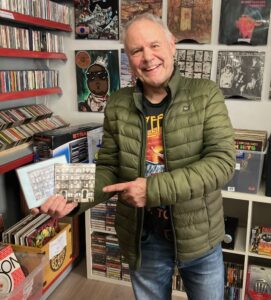
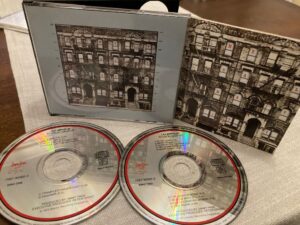
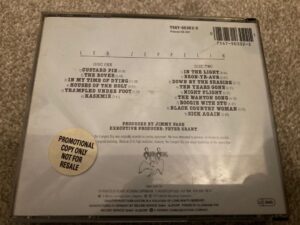
Imagine my delight when In the CD racks I found a copy of Physical Graffiti on CD – the original mid 80s 2 CD edition in a double jewel box and this copy with a promo sticker marked ‘Promotional Copy Only Not For Resale.’
This was one of the first CD’s I purchased when I first got a CD player in 1988. Not the best CD transfer as it misses off the end chat on In My Time of Dying – Jimmy would put that right with the 1990’s remastererd editions but it’s quite a relic and not something I’ve seen for a good while – and a promo copy too.
Now here’s the thing – I could certainly not leave it in the racks and at a mere £3 asking price it was a good £1.49 cheaper than the vinyl version I purchased on this day in 1975 and considerably cheaper that the £15.99 I paid for the double jewel box CD edition back in 1989.
It occurred to me that back in 1975 the notion that I would still be buying this album some 51 years on would have seemed highly unlikely.
But that is the way it is and you can never have too many copies of Led Zeppelin’s Physical Graffiti and certainly not at that price!
It was the perfect way to celebrate this 51st anniversary of a much revered double album…
Dave Lewis – February 25 2026
—————————————————————————————————————————————
More on Becoming Led Zeppelin…
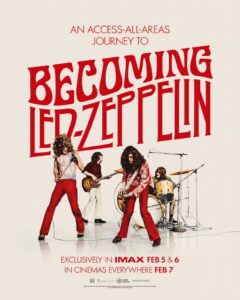
Allison McGourty has been in touch regarding the TBL post on the one year anniversary of the Becoming Led Zeppelin film as follows:
Thanks Dave! That is really lovely. Thanks for sending it. BLZ is the highest grossing documentary of 2025 and was watched three times more on streaming than any other documentary of 2025. Bernard and I have been nominated for the prestigious writers Guild of America Award for Best Screenplay for writing it and the film won the Critics Choice Award for best music documentary!
One more from a year ago – Becoming Led Zeppelin review by Stephen Humphries…
Here’s a very perceptive review of the film by long time TBL contributor Stephen Humphries…
When I saw “Becoming Led Zeppelin,” it was at an IMAX with 12,000 watt sound and 12 channel speakers, including under the seats. The hammer of the gods has never sounded more earth-shattering.
On a 23 x 17 meter screen, the figures of Jimmy, John, John Paul, and Robert towered over the audience. A suitable metaphor for these giants of rock music.
Having said that, the sad truth is that Led Zeppelin have shrunk a little bit in recent years, losing cultural share. To be sure, Zep is still an iconic and famous group. To fans such as myself, they were the most fabulous four of them all. Yet Led Zeppelin went from being the second biggest band of all time to slipping further down the leaderboard. Their Spotify monthly listener numbers lag far behind a lot of other “classic rock” acts. Case in point: Rolling Stone magazine published a story last summer headlined “The Biggest Band in America in 2024 is… Creedence Clearwater Revival.”
Creedence Clearwater Revival has never been more popular than it is now. John Fogerty’s old outfit has choogled along to somehow top Led Zeppelin in Spotify streams. CCR’s vinyl sales in recent years have been so staggering that they are a constant presence in the album charts.
Similarly, Queen and Elton John each boast 48 million monthly listeners compared to Led Zeppelin’s 18 million. Zep also lags slightly behind Pink Floyd. And Led Zeppelin are behind Fleetwood Mac’s 34 million per month.
One of the reasons why Queen and Elton John are so huge is because of their respective massively successful biopic movies. Even Bob Dylan has gotten on board with the idea by getting involved with the Timothee Chalamet-starring biopic “A Complete Unknown.”
Although there was talk circa 1990 of a Led Zeppelin biopic starring – shudder – Jason Donovan as Robert Plant, it’s highly unlikely that any authorized film biopic will ever emerge. The band members surely fear that a movie about them would begin by focusing on, y’know, mud sharks, 14-year-old girls with backstage passes, and Alastair Crowley spells. And then conclude with all those awful tragedies. That kind of tabloid-y storyline would arguably overshadow the music itself. (Cameron Crowe’s still magnificent “Almost Famous” is, in many ways, the closest we’ll get to a Led Zeppelin biopic.)
I imagine there was a hope that, in lieu of a biopic, that “Becoming Led Zeppelin” would give the band’s legacy the kind of boost that Queen and Elton and Elvis have enjoyed in recent years – especially among GenZ, who have discovered those acts’ via those films. One imagines that the remaining band members far preferred a big-screen documentary to the ABBA-style hologram concert show that they reportedly turned down. A museum exhibition similar to Pink Floyd’s “Their Mortal Remains” was also reportedly left on the table. What Led Zeppelin has done to fan the embers of its legacy is to become increasingly permissive of the use of its music in commercials and in movies. Gone are the days when only Cameron Crowe could get the band’s enthusiastic permission to use Zeppelin music in his soundtracks. By contrast, Marvel superhero Thor now makes his entrance with “The Immigrant Song.” Earlier this month, a Nike commercial at the most-watched Super Bowl ever featured “Whole Lotta Love.”
That’s the context for the filmmakers of “Becoming Led Zeppelin” managing to get Jimmy, John Paul, and Robert to sit down (separately, alas) for an ambitious documentary. Will it usher in a Led Zeppelin revival?
At the screening I attended on Saturday night of opening weekend, the audience consisted almost entirely of the GenX and Boomer generations. Same goes for my two cinema outings to see “A Complete Unknown” – which, anecdotally, suggests that all the GenZ girls who swoon over Timothee Chalamet would rather watch him reincarnate Willy Wonka than Bob Dylan. (Philistines!)
I went to see “Becoming Led Zeppelin” with a degree of wariness given the well documented errors and questionable editorial choices by the filmmakers. Indeed, there were a few howlers in the movie that made me wonder why elemental fact checking hadn’t taken place. For example, mislabeling the early footage in Denmark. When the movie gets to talking about Zeppelin’s appearance at the Roundhouse in London, it cuts to concert footage in a circular venue – the 1969 Tous en Scène footage in Paris – but without labeling it as such. So, the average viewer may assume that they are watching that London performance because that is the inference. Similarly, the documentary uses a scene of Led Zeppelin at an airport and implies that it’s footage from their earlier years. The band’s lack of promotion – at least until Jimmy’s recent tweets after the release – didn’t instill confidence beforehand either.
And yet…and yet…and yet…in spite of all these complaints, this movie fucking rocks!
I had doubts about the concept of a movie that only covers the first two Led Zeppelin albums. I was dubious about a movie that traces the individual paths that the band members forged prior to that very first rehearsal/audition in London in August 1968. The musical equivalent of Oppenheimer’s team splitting the atom.
In fact, I was enthralled by the backstories of each of the band members. I knew quite a lot about this stuff already, but the filmmakers managed to find photos and film footage I had never seen before. John Paul Jones’s backstory and his relationship with his parents was particularly interesting. Like his recollection of the pride his father felt when attending Led Zeppelin’s Royal Albert Hall show. (JPJ’s warmth and likeability is one of the most enjoyable parts of the movie.) I knew that Robert’s parents did not approve of his decision to pursue a musical career but I don’t think I appreciated the depth of their estrangement at the time which, fortunately, was only temporary. Very moving, too, to hear the voice of John Bonham. I was fascinated, too, that Jimmy still has his old diary with sessions handwritten in it. No wonder he is Led Zeppelin’s archivist.
I loved director Bernard MacMahon’s indulgent decision to include very lengthy excerpts of Shirley Bassey singing “Goldfinger” right up to the end when she holds that climactic note with the breath controller of a free diver. To paraphrase Barry Norman, and why not? It’s a sensational performance to experience in IMAX.
Indeed, where a lot of music documentaries only show brief snippets of music before segueing to comments by a talking head, I loved how “Becoming Led Zeppelin” features lengthy and uninterrupted musical live numbers. Many of them are already familiar to those of us who own Led Zeppelin’s “DVD” but we’ve never experienced the sight and sound of them quite like this. It’s also a treat to see brief bits of the Bath festival performance with a bearded Jimmy Page wearing a farmer’s hat and a sweater. Also revelatory: Jimmy’s previously unseen (at least to me) acoustic performance on television. I did wonder, though, whether AI could have “filled in” and “enhanced” some of that scene’s degraded film footage. Especially given that the filmmakers allegedly digitally altered other images in the documentary.
Another welcome directorial decision: including the audio from Led Zeppelin’s songs that didn’t make it onto their first two albums. It was so good to hear the likes of “Sugar Mama” grooving through the theater auditorium.
Indeed, it was awe inspiring to experience the band’s music in 12 channels. I wonder if Led Zeppelin will ever consider creating Atmos immersive surround mixes of its catalog? (Jimmy, if you happen to read this, reach out to Atmos mixing specialist – and rock star in his own right – Steven Wilson. As King Crimson, Roxy Music, Yes, Tears for Fears, Chic, XTC, The Who and numerous others will attest, Wilson is the best in the business.)
I reckon it was a wise choice of the filmmakers to rely solely on the testimony of the four band members rather than clutter the narrative with various experts and fans. That said, I wish that the film included the perspective of someone who could tell the audience just why Led Zeppelin were often reviled by the music press at the time. Simply, the music was just too revolutionary, too different, too radical, too willing to confront the staid norms of contemporary music at the time. Music writers didn’t “get” Robert Plant’s revolutionary singing style – later imitated by countless acolytes but never bettered – because it was so far outside of what anyone had done. The sheer attack and intensity of Led Zeppelin was beyond the ken of an older generation of music writers.
The movie does sort of *show* that. The French footage includes shots of some audience members recoiling, hands over ears. They weren’t ready for it yet. Jimmy Page also provides eloquent insight into why Led Zeppelin was uncompromising in its recording and mixing techniques. He elaborates on his vision of releasing carefully sequenced albums with no singles. It was such a brilliant idea to record the first album without a record company so there would be no Micky Most-style interference to steer the band in a commercial radio direction. Peter Grant’s bodyguarding was invaluable to the group as it established its own terms.
I highly recommend a double bill of “Becoming Led Zeppelin” and “A Complete Unknown” because the Led Zeppelin documentary and the Bob Dylan biopic share common themes. They are both about artists who boldly go against the grain of expectations. They resist pressures to conform. Together, the two current cinema releases offer revealing musical histories of the early and late 1960s.
My review has already dragged on longer than any of John Bonham’s 1977 “Moby Dick” drum solos. So, to conclude, “Becoming Led Zeppelin” is a triumph.  Essential viewing. One hopes that it will have a long tail effect when it eventually appears on streaming services where most people will see it. Perhaps this is where a younger generation will discover the band and its timeless music. In the meantime, you owe it to yourself to make a pilgrimage to a cinema. When you first experience the impact of John Bonham’s kick drum at that VOLUME, you will be grinning until the end of the credits.
Stephen Humphries
—————————————————————————————————————

DL Diary Blog Update:

Friday February 20:

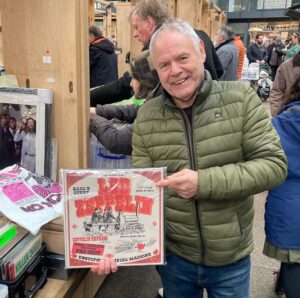
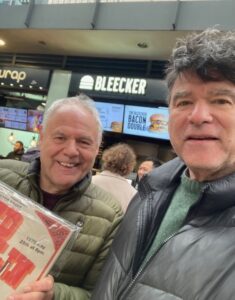
At Spitalfields record fair earlier and well pleased to find the Led Zeppelin Earls Court compete May 25 1975 box set bootleg vinyl package – the fact that I am quoted in the accompanying sleeve note booklet made it an essental purchase!

Friday February 20:

Great to see Mark Hayward at the Spitalfields record fair earlier today – Mark and I go way back and we laughed about the time I purchased a VHS copy of Zep’s The Song Remains The Same film from his shop in 1981 – long before it came out officially – great days !

Friday February 20:

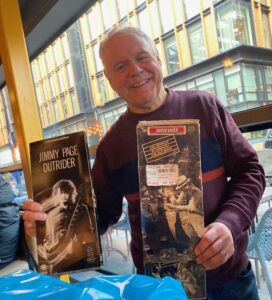
A couple of top finds at the Spitalfields record fair today – long box US CD packages of Led Zeppelin’s In Through The Out Door and Jimmy Page’s Outrider albums – £7 each – I’ll take ‘em!

Friday February 20:

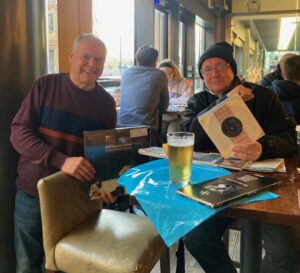
A splendid day at the Spitalfields record fair with my esteemed record collecting comrade Steve Livesley – here we are having a much needed post record fair drink!

Sunday  February 22:

On the player and marking Johnny Echols Birthday today, the Love Forever Changes Concert double album on the Madfish label as recorded at the Royal Festival Hall in 2003.
This was on sale when I saw Love with Johnny Echols at the Stables venue in Milton Keynes in July 2024 ( a gig also attended by Robert Plant). Johnny kindly signed the album for me after the show…

Wednesday  February 25:

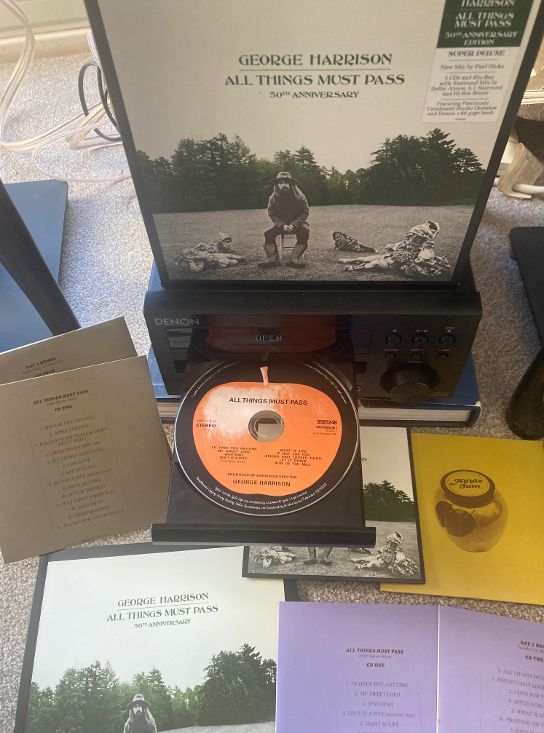
Marking his Birthday today and loading up the brilliant George Harrison All Things Must Pass 50th Anniversary deluxe CD set – my favourite post Beatles recording…

Wednesday February 25:
DL/TBL Physical Graffiti throwback…celebrating the release of Led Zeppelin’s Physical Graffiti 51 years ago this week.
Some Physical Graffiti on 45 – various pressings of the Trampled Underfoot/Black Country Woman single from the DL collection…
Wednesday February 25:
It was 51 years ago….
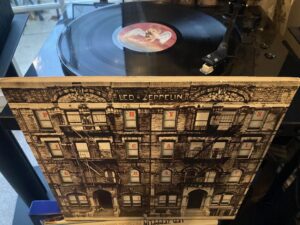
On the player loud and proud ..what else…Led Zeppelin Physical Graffiti as released 51 years ago this week.
I purchased it from WH Smith’s where I worked on the record department – it arrived on Tuesday February 25 a day after the Monday release date due to distribution problems. No matter -it was here at last and I paid my £4.49 less discount for my copy on that day.
This is the original copy I purchased and It still sounds amazing – as it would blaring out on a bright sunny morning here.
It’s my favourite album of all time. A few pops and crackles only adding to its authenticity
Over the 15 tracks this double album contains every aspect that made Led Zeppelin so special…then, when I was 18 years old and now when I am 69 going on 70 … for me they are, were and always will be the best…
Thursday February 26:
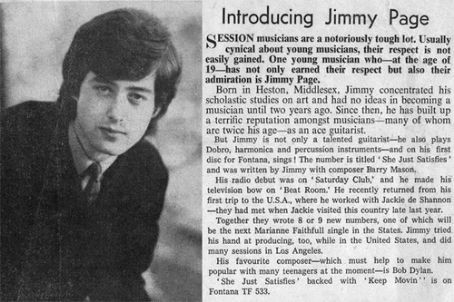
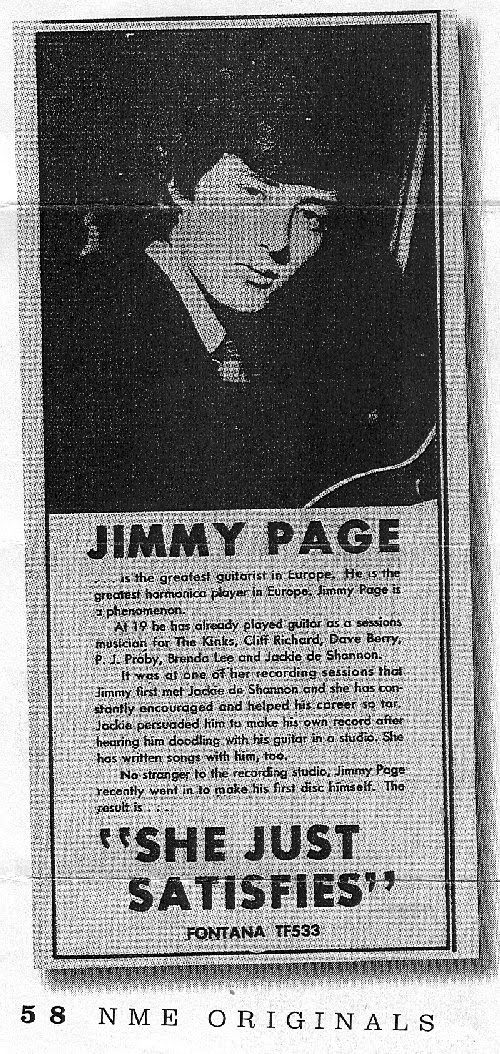
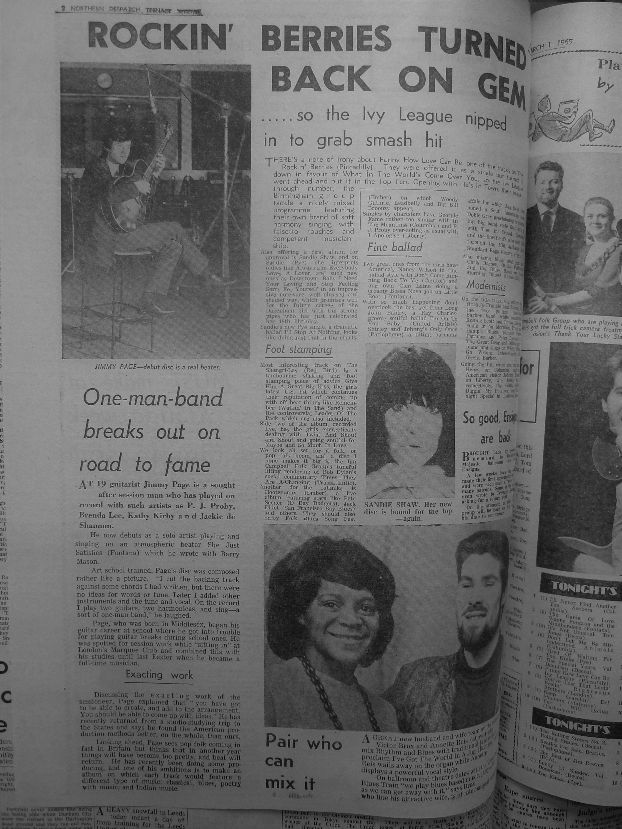
It was 61 years ago today…
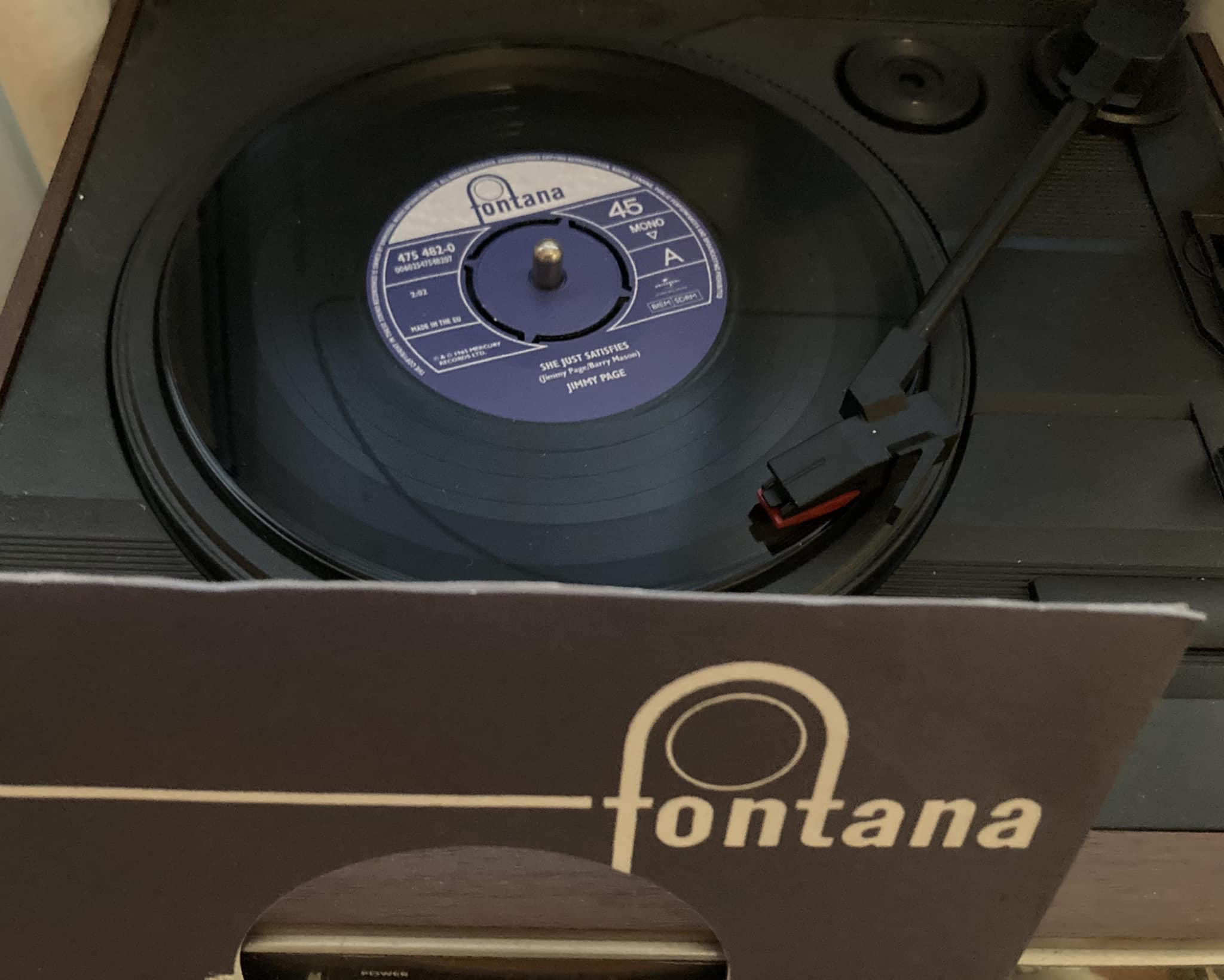
February 26 1965 saw the release of the Jimmy Page solo single She Just Satisfies/Keep Moving…here’s some press coverage from the time…

Thursday February 26:

On the player spinning at 45 RPM and marking its original release 61 years ago today – the Jimmy Page solo single She Just Satisfies – this one is the Record Store Day reissue…

Update here:

A busy week and it’s been great to be out and about again in rather better weather. Late Feb is always a nostalgic period as I look back to the epic release of Physical Graffiti now all of 51 years ago and it’s been great fun to recall that glorious period and of course revel in a double album that still sounds as magnificent as it did when I first heard it all those years back.

Thanks for listening

Until next time…

Dave  Lewis –  February 26 2026

TBL website updates written and compiled by Dave Lewis
Follow TBL/DL on Facebook:

https://www.facebook.com/tightbutloose.loose

1 Star2 Stars3 Stars4 Stars5 Stars (No Ratings Yet)
Loading...

Leave your response!

Add your comment below, or trackback from your own site. You can also subscribe to these comments via RSS.

Be nice. Keep it clean. Stay on topic. No spam.

This is a Gravatar-enabled weblog. To get your own globally-recognized-avatar, please register at Gravatar.