




BECOMING LED ZEPPELIN – ONE YEAR GONE /TBL ARCHIVE INTERVIEW WITH DIRECTOR BERNARD MACMAHON & FEEDBACK FROM OUT IN THE CINEMAS /TBL ARCHIVE 1975 SNAPSHOT/ DL DIARY BLOG UPDATE
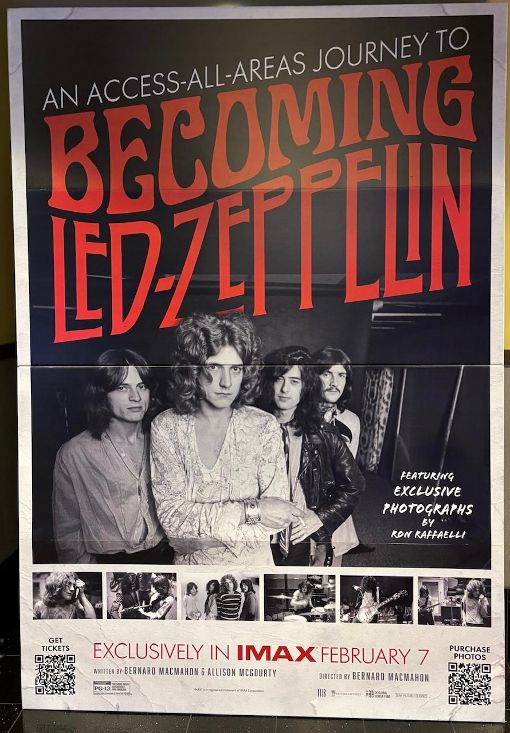
feb 19
Becoming Led Zeppelin – the rejuvenation of the legend…


———————————————————–
TBL Interview with Becoming Led Zeppelin director Bernard MacMahon.

Firstly, here’s an interview I conducted with director Bernard MacMahon last Wednesday in London. Allison McGourty was also present. In the pic above you can see the Record Album that contained the initial storyboard that was used to pitch the film.
Dave Lewis: What inspired you to want to make a film about Led Zeppelin ?
Benard MacMahon: I first was aware of the story from when I was 12 years old, my Mum was an antique dealer and you’d get these boxes of junk turning up and in the bottom of one of the boxes was a fabulous book on Led Zeppelin written by Howard Mylett. So I read this book and it’s the early years told in a very straight forward way. That really inspired my love of Led Zeppelin. After reading the book the second time, my mum came in and said this fascinating thing. She told me one of our customers was actually Peter Grant and I do recall him coming to the house.
DL: How did you pitch it to the band members?
BM: We had finished the American Epic series and it felt to me that Led Zeppelin was the next logical subject. They had really scooped up so many influences – some of which were featured in the American Epic film
So as we always do we prepared a detailed story board. I used a record album book to illustrate this – it was this book that I took in to meet Jimmy Page . Like I said Allison and I had mapped out exactly what we wanted this film to be.
Jimmy was aware of our American Epic film and he really liked our pitch. We used the same pitch to explain it all to Robert Plant and John Paul Jones. They were all on board and we were up and running.
DL: Was it always the intention to cover only the early years of the band?
BM: Yes, we wanted to show the impact they had at the start and the astonishing reception in America. The early years of a band are so intensive and we wanted to illustrate that the best we could. So we started to track down as much footage as we could find. The cut off was always going to be the Royal Albert Hall January 1970 performance.
Basically, the message and story is that if you have a dream and you’re a kid, and you learn everything that you can, and you take every opportunity you can, and you’re ready to embrace new opportunities and new people – well you can achieve that dream
So we presented them with the idea of the film we wanted to do, and we stressed this needed to be an independent film and they trusted us from the beginning.
DL: I found the interviews particularly moving – was that apparent as they were being filmed?
BM: It was very much so. It was key that they were able to each tell their stories so we set the interviews up. We made the decision to have them filmed separately to get the differing views of the three. They all opened up in such an honest way.
We also filmed Jimmy back at his Pangbourne home where the band first rehearsed. They talked about their families and things like that which was really insightful.
DL: Did you also liaise with the Bonham family much?
Yes we did. The Bonham family were like incredibly helpful. Robert brought Pat to meet us and she arrived with the whole bunch of photographs. Then Deborah very kindly provided all these cine films which included John and Pat’s wedding. They were mainly filmed by Jack Bonham – maybe he had a new hobby back then but they came to us in pristine condition.
The Bonham’s introduced us to a lot of people that John knew that were close friends, so we went up the Midlands and hung out with loads of people that John was very close to. You you can start to really get a sense of John the person from how his friends talked about him.
DL: One of the people the film is dedicated to is late Roy Williams – a dear friend of Robert’s who worked with him as his sound man for years. Was he a particular inspiration to you?
BM: Roy was very important and we may not have come away with the film we wanted without Roy. Jimmy, Robert and John all opened up their address books for us so we made many connections.
There was an American Epic weekend staged in Bewdley near where Robert lives. There was a parade of American cars, the public dressed up like cowboy boots, cowboy hats and so it was a wonderful weekend. We met Roy – he was a great guy and helped us get people on board. Another very important contributor was Jimmy Page’s school friend Rod Wyatt.
DL: How did you come across the John Bonham 1972 Australian radio interview ?
We heard a bootleg tape of John talking on an Australain radio show so we knew it existed. I could tell by the recording it was from a quarter inch tape. The challenge was then on to find the source.
So all we had was an Australian interview and I could tell from the questions it looked like it was a set up and the period for the first Australian tour. So we’d done an American Epic festival with the University of Canberra, which happened to be the big radio archive in Australia. We called up the University of Canberra, spoke to them and said ‘Can we send this recording to you and can you identify it?’. They listened and a week later they came back with the name of the journalist. So we call back the University of Canberra and they look a few days but told us they didn’t have it.
Just before I put the phone, I said, ‘Do you have any uncatalogued tapes’ because we’d learned this with American Epic, Archives can sometimes be sitting on pallets of stuff . So I said Yyou know, we did all those favors you that American Epic festival would you start looking?’ I think it was like two or three months later eventually got a phone call at midnight and it was like go to your computer and there was an excerpt from it and then they sent over the reel.
It’s very clear and then after that we found two other interviews also in quarter inch tape. So there’s three interviews, the bulk is from the Australian one, but they are two other ones. Incredibly all the material on it seemed to be John discussing other aspects about the band and his role. he was of course talking in the moment and that really added something special.
DL: The film was first screened at the Venice Film Festival in 2021 with Jimmy Page in attendance – as I know it the film was then re-edited – what changes did you make?
BM: Making the film during the pandemic was another major challenge. We wanted to screen what we had done up to that point in 2021 to get a reaction. Venice was one of the only film festivals being staged so we went there. Of course It was a pleasure to have Jimmy in attendance.
We had an eight minute ovation after showing the film so we knew we were on the right track. However, we felt we did need to do some editing here and there – so we went back and worked on that.
DL: I really liked the way the news reel footage of the time appears during the film – who came up with that idea?
BM: We are both into what we call montage footage. It’s like holding up a mirror to society. Even though Led Zeppelin was not a political group, there was something about the music in the intensity and some of that attack, like the guitar solos and Good Times Bad Times, that were very reflective of those changing times in late ’68, early’ 69. That was when the summer of love was over, and this new progressive youth movement was coming on and taking on governments. The music is a reflection of the often confused times it was released in.
DL: What has been the reaction to the completed film from the band members?
BM: Very positive. We screened the film for Robert and all his family came to see film –his kids and his grandkids – he was saying ‘This was my life’ and there was a very moving reaction to that.
As for Jimmy, every time I’ve seen him watch it, he gets very touched when John Bonham appears. The film has a very strong presence of John and there’s such a huge respect for what he contributed.
One of the most profound reactions was from Jason’s son Jager Bonham. After the Hollywood premiere he came up and shook my hand and said ‘I really wanted to thank you for allowing me to hear my grandfather talk for the first time’. It was just so moving to hear. Things like that have made it all worthwhile.
DL: I’m surprised there’s not a soundtrack album being made available?
BM: With all the work on the film it’s not something we have looked at really. Perhaps it could happen ahead.
DL: The sound quality of the music is delivered quite brilliantly throughout – it was amazing at the IMAX cinemas. How did you go about achieving that?
BM: Well, I knew I needed to go to the best source to really make it work. This included going back to the George Piros and Bob Ludwig cuts. That was another challenge in making the film. We had to make it sound as good as it looked.
DL: is there anything you wish you could have discovered and used?
BM: The only thing we could not find a real good version of was the promotional film they did for Communication Breakdown. It was shot at the Three Images club in Miami in early 1969. We managed to get to the best sources of all the cine film from the era. One of the outstanding finds was the 1969 colour Bath Festival which I know you initially led us too – so thanks for that. We also had the best transfers made of the Supershow and Tous en Scene clips.
DL: Did you consider using the 1970 Bath Fesitval film footage that surfaced on YouTube?
BM: We didn’t as as the cut off was the Royal Albert Hall, our story was always planned to go up to January 1970 when they come back for their homecoming in London. So that was not something we planned. We had sourced the Bath 1970 film long before it appeared on YouTube. I guess if we did do a part two that would be a very good place to start!
DL: Is a second part something you would like to do?
BM: The thing is when you go into a part two and part three of a big story like this, then you start to uncover a lot more events that are universal. The stories become much more universal and therefore perhaps not as interesting. Maybe because you are on this production line of making records touring, making record touring. It’s such a monumental subject so it would demand three parts and six hours or more. So I don’t know -it’s a relief to get this one out which has taken up the last five years.
DL: Final thoughts?
BM: It really has been an incredible journey and we have come away with the film we really wanted to make. We had to maintain a real focus on it. It was so mind boggling the amount of work we undertook to get to this point.
With Becoming Led Zeppelin we wanted to tell the story that would interest us as filmmakers and obviously their audience.
The early years are so inspirational and we think it will inspire younger kids on their journey. It illustrates how to follow your dream. If you have got something you want to do like whatever it is, and your parents are saying you should be an accountant or get a proper job. Well this is a story of how to succeed. We also constructed it in a way that the film can be viewed multiple times. It’s a bit like a musical it can be enjoyed time and time again. This after all is Led Zeppelin, one the greatest groups of all time, and I hope in presenting their early years in the way we have. we have done the subject justice.
DL: Bernard and Allison, I think you have more than accomplished that. It’s s a brilliant film that will be bringing joy to Led Zeppelin fans across the globe in the coming days, weeks and months ahead.
BM: That’s very kind Dave
AM: Thanks Dave
——————————————————————————————————————-
Becoming Led Zeppelin Feedback…
Here’s some views from out in the cinemas… kicking off with my thoughts from the Thursday BFI IMAX 8.30 screening..


Another fantastic screening of the Becoming Led Zeppelin film last night at the excellent BFI IMAX cinema.
———————————————–
- The film really isn’t meant for guys like us who are extreme fans (which I anticipated). There isn’t much new to learn, and I was bit disappointed that the same stories were told even using some of the exact same phrasing and language as we’ve heard for years. But…the story is the story, and that’s how those four guys became Led Zeppelin, so I understand why it was handled in that way. In spite of this, I think that at the story moves and is told in a compelling way that builds interest.
- I was also a bit disappointed that there wasn’t more new, unearthed audio or video that has not been seen before. This is really unfair, though, as you can’t have what simply doesn’t exist, and my hopes and expectations were simply beyond reality.
- As a film, I think it succeeds. If you are a new fan, casual fan, or “normal” fan, I think that this film will be a revelation and will probably introduce the majority of the audience to what we’ve been freaking out over for decades.
- I also think that the pacing and tone are solid for the target goal…not to dip into the sensational, but to focus on the people and the process. I had feared that the band’s involvement would be heavy-handed, but while the tone is far from the sensational, it stays focused on the music. For this presentation of the story, that works well and is appropriate.
- Seeing the film in an IMAX theater is definitely the only way to see it, in my opinion….for the accuracy of the stereo imaging and for the sonic fidelity delivered by the sound system and the acoustic treatment of the room.
- I thought that the mix of selected studio works, live works, bootleg audio and assorted pro shot and bootleg video was a huge success, making the best of what they have available and in the quality available (even if the footage used and the edits weren’t always 100% accurate…no demerits here for me).
- A personal highlight for me was finally seeing video (and extremely clear video) of the Texas International Pop Festival. I had hoped that this would be a full feature in the film (or would be a dedicated release at some point), so I was really pleased to finally see how much great looking video was able to be used.
- The real highlight of the film for me was the overall storytelling, the pace, and the build of the story from start to finish, with the live performance interludes (featuring some of my favorite bits from the early days, which is also the material that I gravitate to the most in my personal listening).
- Lastly, the overall highlight of the film were the vignettes where Jimmy, Robert and John Paul are either watching video that they may not be familiar with and are reacting to it, or….more significantly….listening to John Bonham’s voice and reaction to that. Watching the facial reactions and emotions of the three remaining guys listening to John talk about the band of the individual members was highly impactful to watch and made the entire film, as far as I’m concerned.
——————————————–
Saw it today in Brisbane- absolutely loved it and left feeling warm, fuzzy and elated singing Something Else  – a very moving documentary which was a perfect length – agree that Peter Grant deserved more recognition especially as he almost single handedly turned the tables on promoters in favour of the artist ie Zeppelin.
I loved the complete focus on the music which btw sounded incredible through the IMAX speakers- the reaction to Bonzo’s interview by the three was genuinely moving- the raw energy and emotion of the playing was breathtaking. Overall a triumph and a credit to Bernard MacMahon- hopefully there will be a follow up but knowing how slowly things progress in the Zep camp I doubt it!
Colin Sheil
——————————————————————————————-
————————————————————————————-
Here’s the view of Robert Godwin the renowned Led Zep authority and author of the first Led Zeppelin bootleg guide…
Here’s the view of former Melody Maker journalist Chris Charlesworth who had a long association with Zep during the 1970s…
The promotional material for this film covering the first 14 months of Led Zeppelin’s stellar career suggests that their success was achieved “against all the odds” and that it is the “first officially sanctioned” film about the group. Neither statement is true. The second falsehood is easily rebutted by drawing attention to their 1976 movie The Song Remains The Same, their 2003 five-hour plus career retrospective 2-DVD package, and Celebration Day, the concert movie of their final appearance, when the reformed trio of Jimmy Page, Robert Plant and John Paul Jones performed with Jason Bonham, son of John, on drums, at London’s 02 in 2007. All three films were authorised by the group. The first falsehood is more nuanced but I would argue that the odds on achieving success were pretty short for a quartet that included two of the most experienced musicians on the 1960s London session circuit, one of whom had a keen eye for prevailing trends in rock music, and was managed by a Herculean, no-nonsense strongman who’d operated at the sharp end of the rock’n’roll trade for about seven years.
Quite why Page, Plant and Jones feel the need to tell these fibs is a bit of a mystery but mystery was always an essential commodity in Led Zeppelin’s bag of tricks. Let in too much light and you’re just another band, keep people guessing and you’re special, seems to have been mastermind Page’s mantra from day one; and, in his wisdom, which has never been in short supply, Page has prudently given the nod to a film that explains how they got where they did, but not what they did when they got there.
Becoming Led Zeppelin lets in a bit of that light in making clear that once the starting pistol sounded, Led Zeppelin set off at a furious pace, leaving little to chance. Realising at their first rehearsal in August 1968 that his group had something pretty special when they played together, and that this was their strongest card, Page established a rigorous work ethic from the outset and the others were happy to follow his lead. They made the road their home and recorded their first two LPs in the space of eight months, much of the second while on tour in America. Page and manager Peter Grant were quick to recognise that the kind of music they performed was more likely to find a receptive audience in America, which just happened to be where the biggest returns could be made, not that anyone mentions this.
But before all this happens Becoming Led Zeppelin takes us back to the childhoods of the four boys. Baby boomers all, all bar Plant were raised in families that encouraged their musical ambitions and Jones’ family, the Baldwins, were professional musicians themselves. It was a black and white world but all the families were sufficiently affluent to own cameras and the kiddie pictures offer a sentimental touch not generally associated with Led Zeppelin; even the hardest of rockers were infants once. It would have been nice to include Grant, a virtual fifth member, in this anecdotal dip into the past but he’s ignored, as he is during almost all of what follows.
Next, we move on to influences, with each member allotted a few minutes to say how they were inspired by Lonnie Donegan (Page), Sonny Boy Williamson and Little Richard (Plant), bass players in general (Jones) and James Brown and Gene Krupa (Bonham). That old footage of 13-year-old Page skiffling away on a guitar twice his size on TV in 1957 is still presciently charming, and I enjoyed the footage of their heroes, so a nod here to whoever researched the old clips.
The preparatory years are also fun: Page and Jones as dapper young professionals on the studio circuit – they both played on Shirley Bassey’s 007 theme ‘Goldfinger’, arranged by Jones, amongst many other notable records – before the former is invited to join The Yardbirds and express himself at last; Plant in and out of various experimental outfits in the Midlands, one of which includes Bonham who is torn between drumming and the family building business.
When the four find one another they really were special. Much of the footage of early Led Zeppelin in the film has been seen before but there’s some new stuff and even familiar material has been enhanced. Here we have Page, his long black hair obscuring his features, conjuring up shards of jagged chords on the rather shabby looking, custom-painted Telecaster gifted to him by his pal Jeff Beck; a maestro on lightning fast solos, slides and the scraping of the violin. We see Jones running on the spot as he feverishly plucks the strings of the Fender Jazz Bass he used for years, its long neck swaying dangerously close to Plant on stages much smaller than those we grew accustomed to seeing Zep play on later in their career. The young Plant, at 20, is much thinner than he is today, a shaman in the making, trading vocal shrieks with Page’s bent notes, his curly hair bouncing, forever on the move. And at the back there’s Bonham, tumbling into his drums, grinning as he maintains a steady rhythm with Jones yet always looking to accentuate whatever Page is playing or Plant singing with a roll or a crash or an explosion everywhere. “I fell in love with his right foot,” says Jones at one point.
Led Zeppelin were truly fantastic, full of energy, in the early days but the suggestion that they toured America before the UK because they were ignored at home is open to question. The press in the UK didn’t ignore them – the earliest ever feature appeared in Melody Maker, written by Chris Welch after Page visited the office without prior warning, and I even wrote about them in the Bradford Telegraph & Argus before I joined MM. They chose to tour the US first simply because Page and Grant saw greater opportunities there and it was therefore advantageous to do so. Rolling Stone in the US may have been dismissive but that was really an exception. By and large, they were loved wherever they went, as the rapturous fans in their audiences – many of them female – seen in the film testify.
The present day interviews are candid and occasionally revealing with screen time shared impartially. His silver hair held back in a ponytail, Page looks dignified and, as ever, is the most enthused, contented and diplomatic, his pride in Led Zeppelin undimmed. Jones, traditionally the most reticent member of the group, looks the youngest, his hair trim, his features eager. He has plenty to say, which is refreshing, and he comes across as very likeable, modest too, almost as if 12 years in Led Zeppelin was just another session date in his work sheet. “Led Zeppelin? A silly name,” he says. “But we were stuck with it.” Plant, craggy, his golden hair turned to bronze and tumbling everywhere, is the most droll, the slight grin and twinkle in his eye suggesting there may have been times when he’s looked upon Led Zeppelin as a youthful folly. “My family wanted me to be a chartered accountant,” he says, tongue firmly in cheek. Of his first plane flight to the US he expresses astonishment at being served a meal on a plate with real cutlery that in different circumstances he might consider stealing. Bonham is represented by a hitherto unheard interview he did around 1970 that acts as a voice over, and he too seems to be in a state of perpetual wonder at all that happened to Led Zeppelin in such a short space of time. His wife Pat warned him on more than one occasion not to get mixed up with “that Planty”.
The emphasis, though, is on the music, and Becoming Led Zeppelin features heaps of terrific footage from America and the UK, some hitherto unseen, at last by me, though at just over two hours, it is pretty long and could have been trimmed, especially during the final half hour. If its intention is to find new fans in the 21st Century, it’ll probably succeed, especially as it stops long before Led Zeppelin reached their apogee two or three years later and dutifully ignores the stairway to indulgence and subsequent mischief that led indirectly to their demise.
——————————————————————————————————————————————————–
TBL Led Zep ’75 Snapshot:

THURSDAY FEBRUARY 27 ,1975
HOUSTON, TEXAS
SAM HOUSTON COLISEUM
Set: Rock And Roll/Sick Again/Over The Hills And Far Away/In My Time Of Dying/The Song Remains The Same/The Rain Song/Kashmir/No Quarter/Trampled Underfoot/Moby Dick/Dazed And Confused (inc. Woodstock)/Stairway To Heaven/Whole Lotta Love – The Crunge – Black Dog.
This one from the late much missed Mark Bowman – he also took the pics here from that night.
Background Details; After Robert and Jimmy spent a holiday in Dominica for 10 days, while Jonesy and Bonzo flew home to their families, a well rested Led Zeppelin, Peter Grant and the crew reconvened in Houston, Texas to start the second leg of the 1975 USA tour on February 27th, 1975.
This night was special as it was the first live show after the US release of the eagerly anticipated double LP, Physical Graffiti. By all accounts, they played a ferocious show that night that clocked in at nearly 3 hours and 45 minutes. Reporters mentioned in the newspaper the next day that the “kids went crazy”, and the crowd definitely spurred the band to greater heights that night… One concertgoer mentioned – “This was the FIRST concert I have ever been to where the live sound in the arena was equal to greater than the sound on the Led Zeppelin studio recordings that were recorded so well…”
Robert mentioned to the crowd that “we were off for a few days, but we’re back, well rested and in our glory.!” Very prophetic, looking back 40 years later…. Unfortunately, no bootleg recordings have ever surfaced of this particular show to document the power they were playing with that night, so it just will remain a very special evening for the ones who were there….
First Hand View from Mark Bowman:
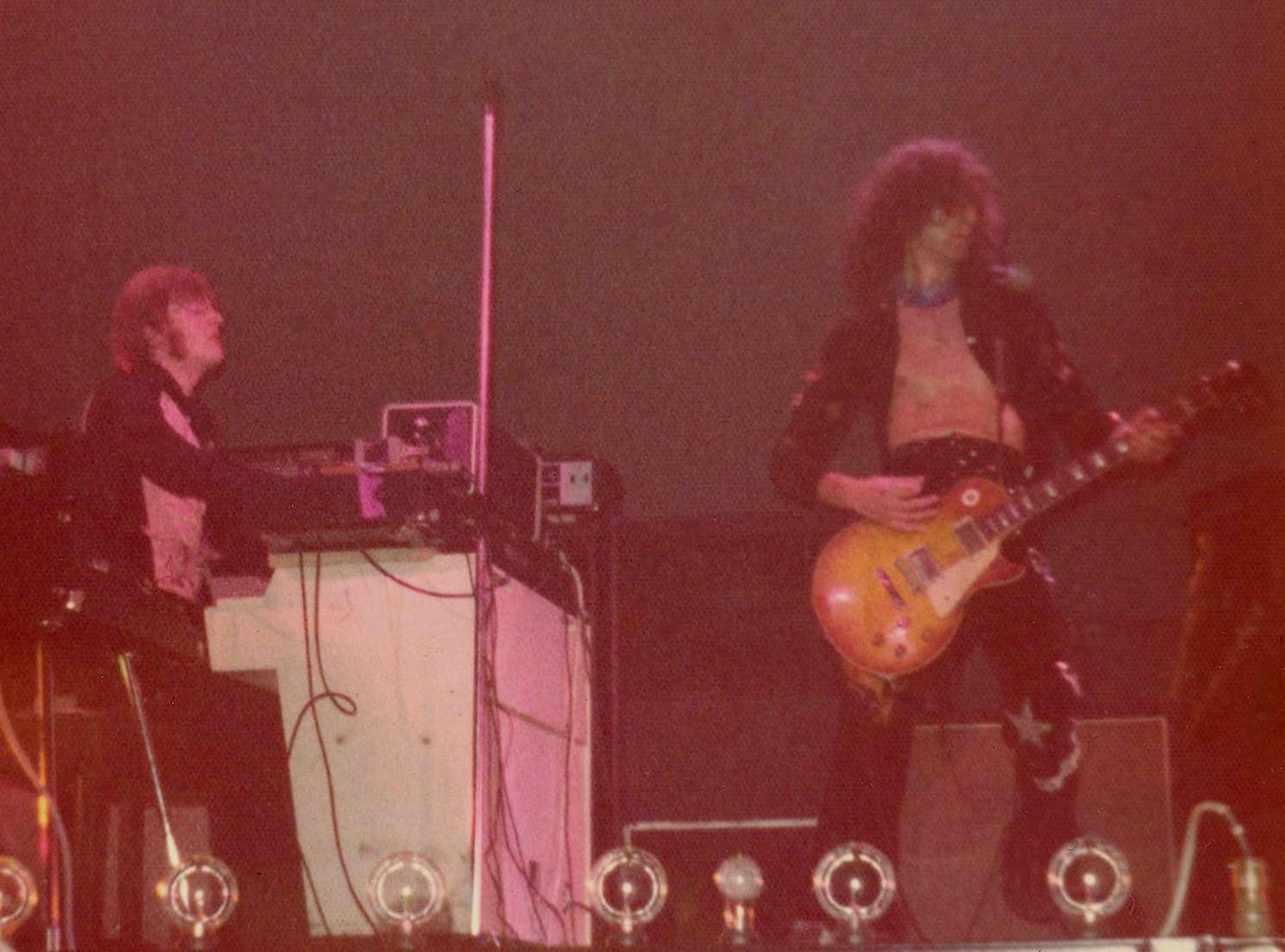
The beauty of this show – there was none of the violence and aggression from the fans that had marred some of the earlier dates in the Eastern US gigs on the 1st leg. Robert specifically commented about how the crowd had a “very happy and a good feeling vibe” that night for the band, which kept them focused on the task at hand….which was to rip the roof off the arena that evening. I only had a little Kodak 110 Instamatic camera with me at the time, so all my photos are grainy and low resolution. You still get the general idea by looking at them – but what I would have given to have my 35mm with me that night to truly capture this incredible evening. It turns out to be the only time I ever saw the mighty Led Zeppelin perform live… As fantastic as it was to attend the reunion O2 show in London in 2007, this gig was the COMPLETE package…. It is burned into my memory banks for life. Mark Bowman
RIP Mark
DL Diary Blog Update:
Friday February 14:
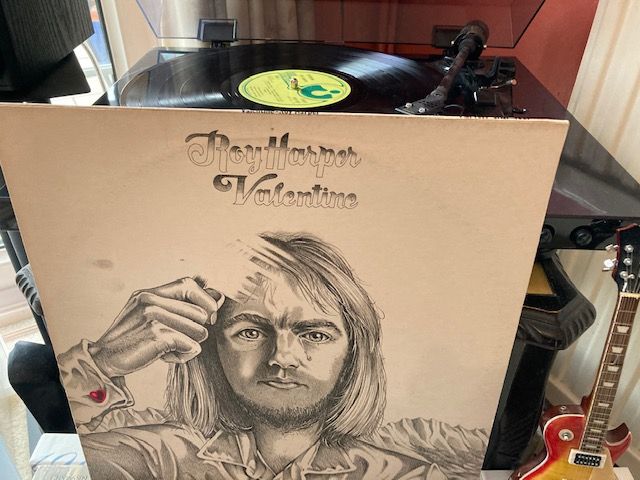
It was 52 years ago…
On the player the very fine Roy Harper Valentine album. I purchased this at WH Smith in Bedford the day it came out on February 14 1974. The back cover has the inscription ‘’Dedicated to Bonzo, Jimmy, John Paul and Robert…
That evening Roy played a celebrated gig at London’s Rainbow Theatre –here’s the gig gen via the TBL archives…
THURSDAY FEBRUARY 14 1974 – LONDON RAINBOW THEATRE
Jimmy Page, Robert Plant and John Bonham are all in attendance for Roy Harper’s St. Valentine’s Day concert. Jimmy, resplendent in a Chinese jacket decorated with hummingbirds, joins Roy’s all star band comprising Keith Moon (drums), Ronnie Lane (bass) and Max Middleton (keyboards) for numbers including ‘Same Old Rock’ (playing a Martin acoustic), ‘Male Chauvinist Pig Blues’ and ‘Home’ (playing the Gibson Les Paul) and ‘Too Many Movies’. ‘Home’ includes a cameo appearance from John Bonham who comes on strumming an acoustic guitar, dressed in a red jacket and black tights and sporting a pork pie hat. Finally, Robert Plant strolls on at the end to act as MC to declare to the crowd: “Ladies and Gentlemen – Roy Harper!!”
Some of this set was later issued on Roy’s ‘Flashes From The Archives Of Oblivion’ double album. Harper dubbed this one-off line-up as The Intergalactic Elephant Band.
Jimmy Page: “We maybe played a few wrong notes here and there, but what the hell -the spirit of the thing was great.”
Saturday February 14:
Saturday February 14:
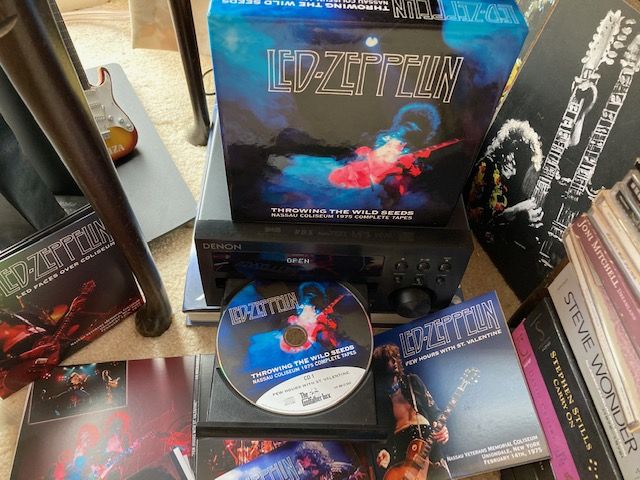
Loading up the truly excellent Led Zeppelin Few Hours With St. Valentine 3 CD set which is part of the rather splendid 6 CD bootleg box set Throwing The Wild Seeds – Nassau Coliseum 1975 Complete Tapes.
This is the February 14 performance as recorded 50 years ago today – a blistering set and my, they were on top of their game on this Valentines night…
Sunday February 15:
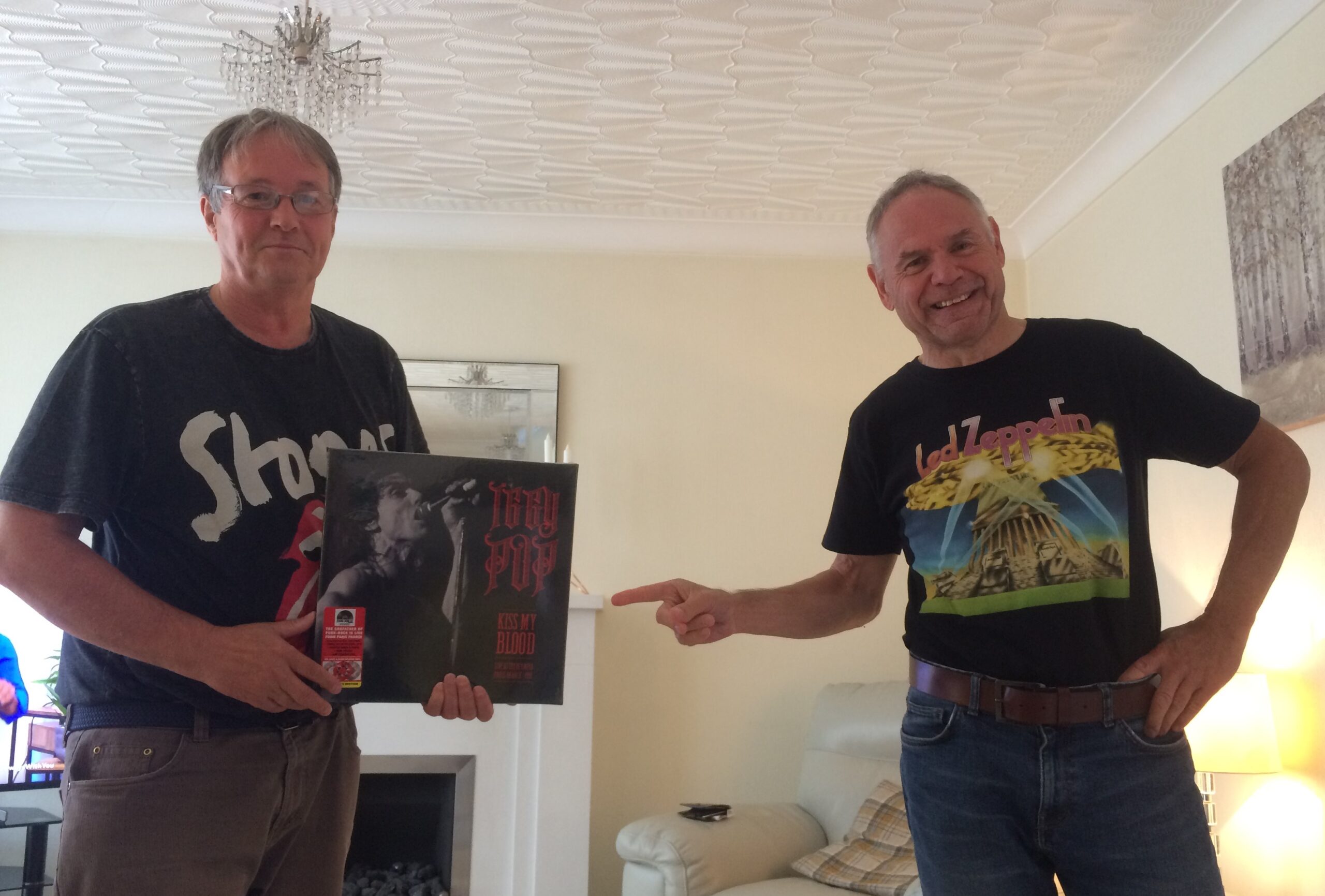
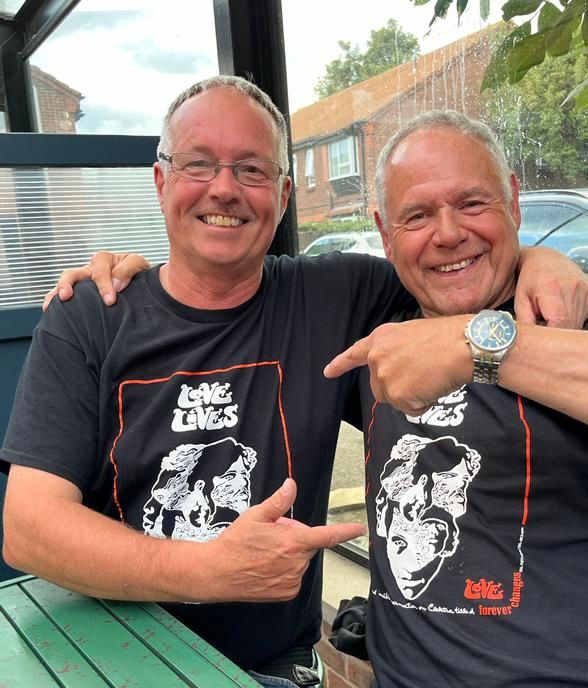
It’s a Happy Birthday to our very good friend Mr Steve Livesley , fellow record collecting comrade and all round top man – Happy Birthday from Janet and I – have a great day mate…
Sunday February 15:

Great to have a visit this morning from the Birthday boy Steve Livesley with Anne-Marie Jones – photo by ace photographer little Ollie Lewis! Have a great day Steve
Sunday February 15:
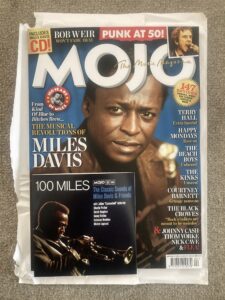
An afternoon in the company of Miles Davis brightening up yet another rainy day here – with the brilliant new issue of Mojo with the Miles cover feature and cover mount CD and the superb In a Silent Way on the player…
Monday February 16:


It’s a Happy Birthday to Mr Melvyn Billingham – long TBL supporter and all round top man – he has been a great support to us here with many a kind word – Happy Birthday from Janet and I and have a great day mate…
Monday February 16:
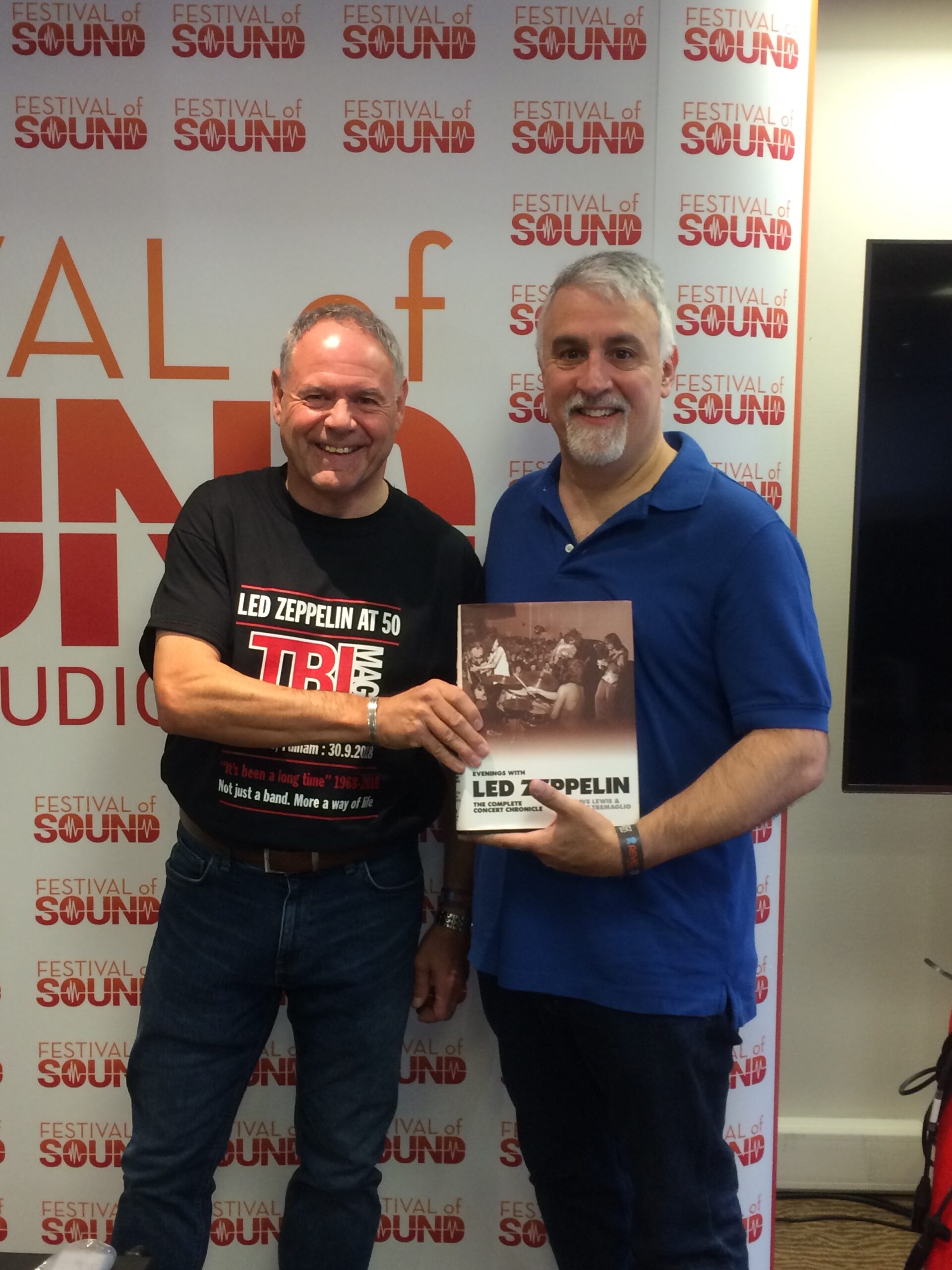
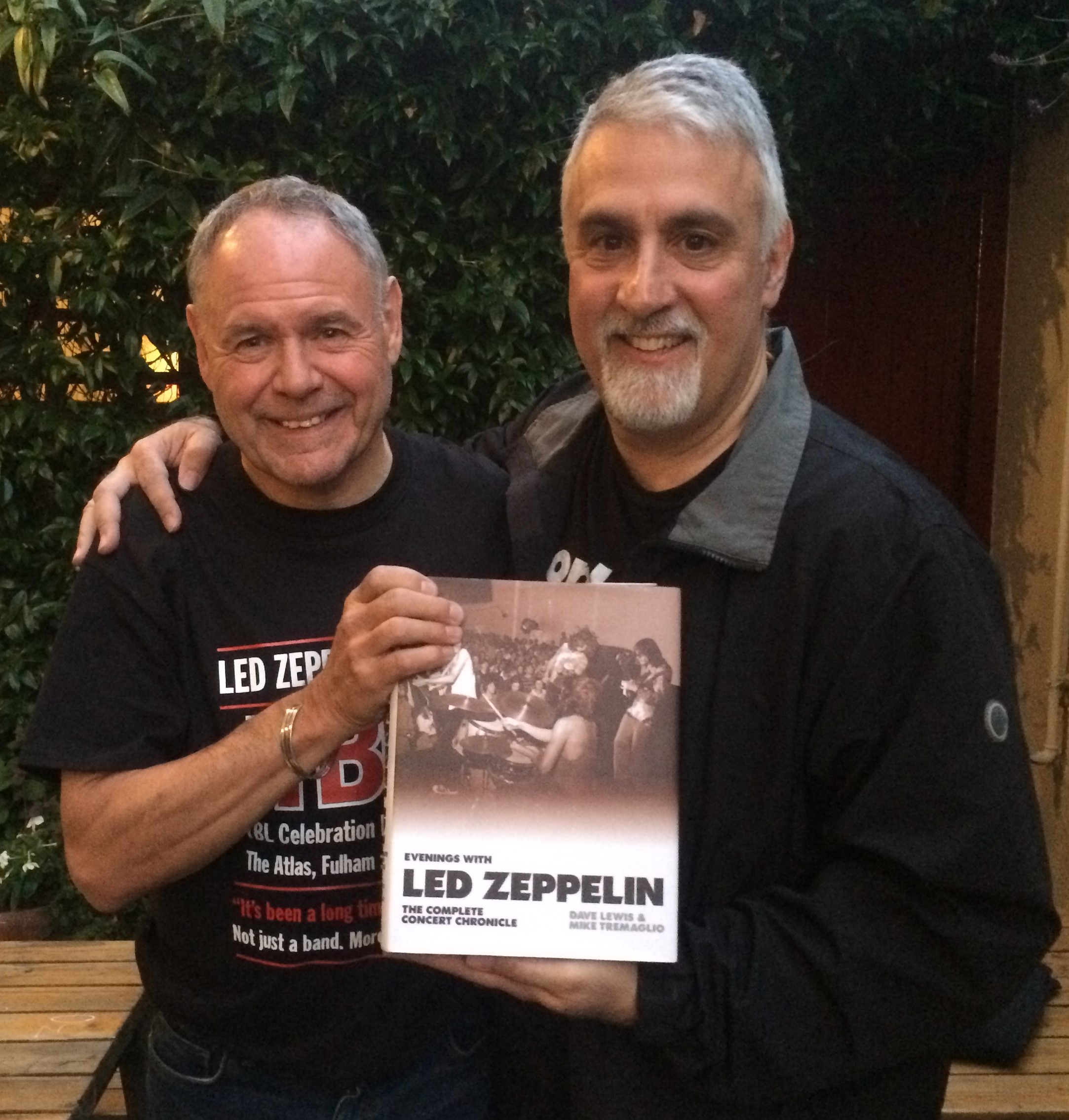
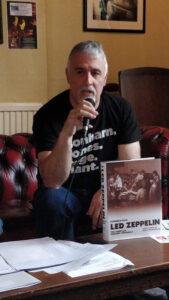
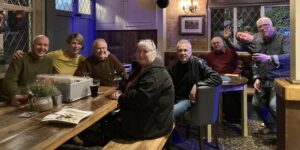
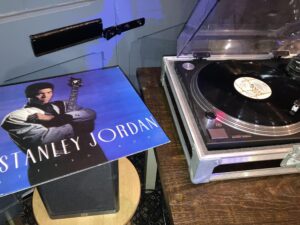
Stanley Jordan’s version of Zep’s Stairway To Heaven went down well tonight at the Pete Burridge record club at the Castle tonight…
Wednesday February 18:
Until next time…
Dave Lewis – February 18 2026
TBL website updates written and compiled by Dave Lewis
Follow TBL/DL on Facebook:


 (No Ratings Yet)
 Loading...
Leave your response!