



TBL ARCHIVE SPECIAL – LED ZEPPELIN IV – 55 YEARS GONE – THE ALBUM – WHAT THE PAPERS SAID – RARE PRESSINGS/ JIMMY AT MUSIC INDUSTRY TRUST AWARDS/THE COLLECTOR COLUMN/ALAN PERRY RIP /MY THOUGHTS ON THE WHO BY NUMBERS/DL DIARY BLOG UPDATE

TBL Archive Special:
Led Zeppelin IV – 55 years gone…
55 years ago this month the fourth Led Zeppelin album emerged in a slightly mysterious manner with that enigmatic sleeve. I vividly remember the excitement and anticipation of the album in the music press that month. In fact the November 6 1971 issue of Melody Maker was something of an historic issue because it contained the first UK sighting the four individual symbols that would make up the title of Led Zeppelin’s fourth album. Each symbol was featured on the end of a page – a series of teaser adverts for the forthcoming album though nobody really knew it. Now I had read a recent interview with Jimmy Page in which he had explained the album title would be made up of four runes – I did notice those symbols in that issue thinking they looked very odd – but I did not realise these were the very symbols that would become such an integral and lasting image of the band.


It was about to get even more exciting for me with the prospect of attending the November 21 Wembley Empire Pool show. Tickets a mere 75p! It’s fair to say that this advert announcing the second date was something of a life changer for me – as things were never quite the same in our house after what I witnessed on that cold November Sunday evening all of 54 years ago.
This wasn’t just a band…
Led Zeppelin IV…
Of all their records, Led Zeppelin’s fourth album, released in late 1971, remains their listened to and admired work, and with sales of 38 million and counting it is also far and away their most successful. Featuring both the often maligned Stairway To Heaven and the widely admired ‘When The Levee Breaks’, the set is without question the most accessible of their catalogue and it continues to attract new listeners by the week. Few albums in the history of rock can rival its influence.
The fact that much of the album was made in a mysterious, run-down, 18th century workhouse in the middle of rural Hampshire only adds to its legacy. It’s the product of a band given absolute musical freedom to do as they wished in an environment that encouraged the development of their ability to blend acoustic and electric influences within a rock framework, which they did more successfully than any other act before or since.
As a complete work it remains their most focused statement. From Page’s unimpeachable riffs, through Jones musical invention and Plant’s clarity of vocal to that titanic John Bonham drum sound – Led Zeppelin IV still emits a freshness that belies its age.
Dave Lewis – November , 2025
More Four at 55
This one from 2021…

OFFCIAL PRESS RELEASE NOVEMBER 8, 2021:
(aka Led Zeppelin IV)
Celebrates 50 Years
It’s Been A Long Time Since I Rock And Rolled…
Untitled, undeniable, and unstoppable. Led Zeppelin’s fourth studio album, better known as Led Zeppelin IV, arrived 50 years ago on November 8, 1971 in the US and November 19 in the UK.
Led Zeppelin IV remains one of the most creatively influential and commercially successful albums in the history of music. As an artistic statement, the record struck a chord that continues to resonate globally among music fans while inspiring generations of musicians.
Commercially, Led Zeppelin IV is a juggernaut, selling more than 37 million copies worldwide. In the U.S., the album was recently certified 24x platinum by the RIAA, ranking as the fifth best-selling album of all time as well as the best-selling album by a British artist (tied with The Beatles aka The White Album). Outside America, the album is certified diamond in Canada (x2); multi-platinum in Australia (9x), the U.K. (6x), and France (2x); platinum in Argentina, Brazil, Italy, Norway, Poland, and Spain; and gold in Germany (3x).
Led Zeppelin IV also topped the album charts in the U.K., Canada, and the Netherlands, and peaked at #2 in Australia, Denmark, France, Sweden, as well as the U.S., where it remains the best-selling album of the band’s catalog.
Before the success and accolades of 1971, the band first spent the fall and winter of 1970 writing and recording Led Zeppelin IV, with early recording sessions beginning in London at Island Studios in December 1970. A month later, the band moved to Headley Grange, a country house in Hampshire, England. They converted the house into a recording studio and used the Rolling Stones Mobile Studio to record most of the album’s basic tracks with engineer Andy Johns, who also engineered some of Led Zeppelin II and III.
Jimmy Page, who also produced the album, says: “After the brief stay that Robert and I had at Bron-Yr-Aur cottage [while working on Led Zeppelin III], I could see a situation where we all resided at Headley Grange and had a recording truck. I was keen on this whole idea of using it as a workplace so you could concentrate totally on the effort of making the music, while residing at the location.”
“It was all a bit experimental,” John Paul Jones says. “But it was the first time we’d actually stayed together. Before, we were recording in studios…and it was always hotel, studio, hotel, studio. We’d never been in one place and had recording facilities there. So that was really a new way of working for us, and I think it was a really good way. We just had this huge old room with a big fireplace with all the equipment set up. And you could just wander down and start stuff up if nobody was there, or if somebody else would turn up, there would be a bit of jam. There was music making in some way all the time, which, as you can see by the result, worked out pretty well.”
This unconventional (for the time) approach gave the group more freedom to capture spontaneous performances and moments of inspiration. Of the writing of “Stairway To Heaven”, Robert Plant recalls:
“I was sitting next to Jimmy in front of the fire at Headley Grange. He’d written this chord sequence and was playing it to me. I was holding a pencil and paper and suddenly my hand is writing the words ‘There’s a lady who’s sure all that glitters is gold…’ I sat there, looked at the words and almost leaped out from my seat. Looking back, I suppose I sat down at the right moment.”
The band also found ways to use the acoustics of Headley Grange to their advantage. Most famously, drummer John Bonham was recorded playing “When The Levee Breaks” in the formal entrance hall of the house using microphones hanging nearby in a flight of stairs. Today, it is one of the most-famous drum sounds in the world and has been sampled countless times by artists across multiple genres including Beyoncé, Beastie Boys, Massive Attack, J. Cole, Björk, and Eminem.
When the basic tracks for the album were finished, the band returned to London to record “Stairway To Heaven” and added overdubs to the Headley material at Island Studios. Soon after, Page traveled to Los Angeles to work on the initial mix of the album at Sunset Sound studios before later returning to Island Studios for additional mixing. The final mix was then delayed until July to accommodate the band’s spring and summer tours.
One of the most memorable parts of the album artwork was the four symbols used on the inner sleeve and album label to represent the four band members.
“There was a really nice little book of signs and symbols,” John Paul Jones says. “So, we decided to choose our symbols from this book appropriate to each member. So, Bonzo [John Bonham] and I dutifully went away, and we actually chose symbols which were kind of the opposite of each other graphically, which was quite strange. And then, of course, Robert and Jimmy designed their own. They all had their own personal meanings.”
Famously, the untitled album was issued with no text on the front or back covers, including the band’s name or an album title – a radical idea at the time.
“After the release and success of the third album, we were still getting negative reviews about the albums and concerts in certain trade journals in America,” Page recalls. “And even after the third album, it was being said that we were ‘a hype’ and one thing and another. It was slightly aggravating. It seemed as though it would be an interesting proposition to actually put out an album with no information on it at all…and see how it would sell.”
“The cover means whatever people want to read into it.” said John Bonham around the album’s release. “For me it means: ‘I’d rather live in an old house than a block of flats.’ My personal view is that the album is the best thing we’ve ever done. I love it. It’s the fourth album and it’s the next stage we were in at the time of recording. All the albums have been different and to my mind this is the best and that’s not trying to be big-headed or flash.”
ABOUT LED ZEPPELIN
In 1968, Jimmy Page formed Led Zeppelin, one of the most influential, innovative and successful groups in modern music, having sold more than 300 million albums worldwide. The band rose from the ashes of The Yardbirds, when Page brought in Robert Plant, John Bonham, and John Paul Jones to tour as The New Yardbirds. In 1969, Led Zeppelin released its self-titled debut. It marked the beginning of a 12-year reign, during which the group was widely considered to be the biggest and most innovative rock band in the world.
Led Zeppelin continues to be honored for its pivotal role in music history. The band was inducted into the Rock & Roll Hall of Fame in 1995, received a Grammy® Lifetime Achievement Award in 2005, and a year later was awarded with the Polar Music Prize in Stockholm. Founding members Jimmy Page, Robert Plant and John Paul Jones – along with Jason Bonham, the son of John Bonham – took the stage at London’s O2 Arena in 2007 to headline a tribute concert for Ahmet Ertegun, a dear friend and Atlantic Records’ founder. The band was honored for its lifetime contribution to American culture at the Kennedy Center Honors in 2012. In January of 2014, the band won their first ever Grammy award as Celebration Day, which captured their live performance at the Ertegun tribute concert, was named Best Rock Album.
Led Zeppelin IV – 55 years gone…

To mark the 55th anniversary of the release of Led Zeppelin IV here’s a TBL archive feature – first compiled for TBL issue 15 though not used at the time – it eventually appeared in the my Celebration II – The Tight But Loose Files book.
The Making Of Led Zeppelin IV – Part One:
On the evening of Saturday, September 19, 1970, the four members of Led Zeppelin took a final bow before leaving the stage of New York’s Madison Square Garden. It signalled the end of a massively successful US tour, their two performances at the Garden alone netting each of them around $30,000 – not bad for six hours work. Their second album had been a fixture on the album charts on both sides of the Atlantic, racking up sales of over a million in both territories. The previous June the group’s bill topping appearance at the Bath Festival had cemented their reputation on home soil. Readers of the then hugely influential Melody Maker had just voted them as the top act in their annual pop poll, ending years of dominance by The Beatles.
There was simply no doubt about it. Led Zeppelin were now the biggest band in the world.
Then came the backlash…
In early October their eagerly awaited new album, Led Zeppelin III, hit the stores. Its bold agenda in combining the familiar, trademark heavy rock dynamics with more acoustic textures confused both the public and press alike. Headlines such as “I… 2… 3 Zep weaken” were rife as this new direction confused and, to some degree disappointed, critics.
Though Zep III sold well initially it did not to have the across-the-board appeal of their first two albums. Never entirely at ease with the press, Page and Plant were particularly sensitive to the criticism. “The headlines are saying Zep goes soft on their fans or some crap,” remarked Plant to Record Mirror at the time. “The point is when you begin a new album you never knew how it’s going to come out.”
For Page the third Zeppelin album signaled the beginning of a new era. “There is another side to us. This album is totally different to the others and I see this as a new direction.”
Plant again: “Now we’ve done Zeppelin III the sky’s the limit. It shows we can change, we can do things. It means there are endless possibilities. We are not stale and this proves it.”
Brave fighting talk – but quite how their following would react long term to this new direction was at the time still in question. After the initial glow of success they were at something of a crossroads, making their next album crucial. Page later reflected: “With Zep III we thought we’d made a great album – in fact we knew we had. At the time, though, it was said we had started playing acoustic instruments because Crosby, Stills & Nash had just come through and we were ripping them off. I know the record company expected us to follow up ‘Whole Lotta Love’. But we never made a point of trying to emulate something we had done before.”
Sensibly they took their time in recording the crucial fourth album. To recharge their batteries manager Peter Grant refused all offers to tour over the coming months. This included turning down flat a cool one million dollars to appear on a New Year’s Eve I concert to be relayed across the world via satellite. Years later | Peter Grant noted: “I got approached for the band to perform a show in Germany on New Year’s Eve 1970 that would be relayed to American cinemas. The offer got up to a million dollars but I found out that satellite sound can be affected by snowstorms so I said no. The promoters couldn’t believe it, but it just wasn’t right for us.”
Aside from a day out in October to accept a clutch of gold discs from a Parliamentary Secretary for their part in sustaining the country’s healthy balance of exports, the group laid low.
In late October Page and Plant returned to the idyllic cottage half way up a mountain in South Snowdonia known as Bron Yr Aur. It was here that earlier in the year they had conceived many of the songs for Zep III. This return visit again found them ensconced around the open fire with acoustic guitars in hand preparing material for the next record.
They already had a backlog of completed and work-in-progress ideas, amongst them a lilting, Neil Young-influenced: titled ‘Down By The Seaside’, ‘Hey Hey What Can I Do’, a semi-acoustic country stomp and, in the same vein, a song called Poor Tom’. ‘The Rover’, then an acoustic idea with idealistic lyrics, was another song waiting to be honed. John Paul Jones had been working on a brooding keyboard piece that would later emerge as ‘No Quarter’, while Page had began demoing a lengthy instrumental track which started off tranquil but built to a crescendo. We all know how that idea flourished, initially they considered a double album, and Page even toyed with the bizarre idea of issuing the album as four separate EPs. After the Zep III backlash they were immensely keen to lay down some fresh new material.
In December they booked initial studio sessions at Island Studios. The Basing Street location was fast becoming the most in-demand studio in London and they had recorded much of Zeppelin III there the previous May. Page, though, was also looking to record on location with The Rolling Stones’ newly built mobile recording unit. “We started off doing some tracks at Island then we went to Headley Grange, a place we had rehearsed at. We took The Stones’ mobile. It was ideal. As soon as we had an idea we put it down on tape.”
Headley Grange, a largely derelict 18th century manor house, was situated in deepest Hampshire. A three-storey stone structure built in 1795, it was once a workhouse known as Headley Poor for the aged and infirm, and in 1870 it was bought by builder Thomas Kemp who converted it to a private residence and. renamed it Headley Grange.
In the wake of the ‘getting it together in the country’ trend that acts such as Traffic had pioneered in the late Sixties, the place began to be used as a rehearsal venue for the likes of Fleetwood Mac and Genesis. It was Fleetwood Mac who suggested the premises to Page.
Plant reflected: “Most of the mood for the fourth album was brought about in settings we had not been used to. We were living in is falling down mansion in the country. The mood was incredible.”
So on a cold January morning early in 1971, accompanied by a handful of roadies plus engineer Andy Johns (brother of noted producer Glyn Jones who had worked on the first Zeppelin album), Page, Plant, Jones and Bonham convened on the old workhouse to set up and record material for their fourth album. Parked outside was the Stones’ mobile studio looking not unlike some vintage army intelligence unit.
Engineer Andy Johns recalled the idea behind going there in an interview with Guitar World: “I had just done Sticky Fingers with the Stones and we’d used the mobile truck on that. So I believe 1 suggested using the truck to Jimmy. We had used Mick’s house at Stargroves but Jimmy didn’t want to stay there because Mick wanted too much money. Then Jimmy found this old mansion so we brought the truck there.” They did eventually record at Stargroves the following year for the Houses Of The Holy album.
John Paul Jones has less positive memories of their stay at the Grange. “It was cold and damp. I remember we all ran in when we arrived in a mad scramble to get the driest rooms. There was no pool table or pub. It was so dull but that really focused your mind on getting the work done.”
On hand to monitor the recordings was Ian Stewart. Stu, as he was affectionately known, was a long time backroom associate of The Rolling Stones – and had even been in an early line up of the group prior to Andrew Oldham grooming the younger band members for success. Stu was an accomplished jazz and blues pianist, and his battered old upright piano was packed alongside the Zep gear in preparation for the likelihood of a jam session or two. The relaxed nature of the whole set up deemed this inevitable.

Early on during the warm up sessions, John Bonham began banging out the cymbal led introduction to Little Richard’s ‘Keep A Knockin”. Ian Stewart joined in the fun, adding a Jerry Lee Lewis barrelhouse piano backdrop. Jones and Page picked up the mantle, adding Scotty Moore-like guitar runs from the, golden era of Sun Records. Plant soon cut in with a vocal line, but instead of tripping effortlessly into one of the many rock’n’roll standards that they performed live on stage he screamed out nondescript lyrics built around a chorus of “It’s been a long time since I rock-‘n’ rolled”. Within minutes they knew they had something, as Page remembers: “We were doing something else at the time but Bonzo played the beginning of a Little Richard track. We had the tape running and I started doing that part of the riff. It ground to a halt after 12 bars but we knew we had something – Robert came in with the lyrics and within 15 minutes it was virtually complete.”
To be continued…
Dave Lewis
LED ZEPPELIN IV WHAT THE PAPERS SAID

A guaranteed million seller well before release, perhaps in theory even before it was recorded, this long awaited fourth Zeppelin album is of greater importance than their controversial third LP. If Zep III gave the first indications that their music was by no means confined to power rock then this new album consolidates their expanding maturity. The eight cuts here follow through with unbridled confidence, expounding in greater details the ideas formulated on the previous album. Once again Led Zeppelin is airborne and the flight course looks very favourable. Roy Carr, New Musical Express
It might seem a bit incongruous to say that Led Zeppelin, a band never particularly known for its tendency to understate matters, has produced an album which is remarkable for its low keyed and tasteful subtlety. But that’s just the case here. The march of the dinosaur that broke the ground for their first epic release has apparently vanished. Taking along with it the splattering electronics of their second effort and the leaden acoustic moves that seem to weigh down their third album. One of the ways in which this is demonstrated is the sheer variety of the album. The got it down all right – this one was gold on the day of release. Not bad for a pack of Limey lemon squeezers. Lenny Kaye, Rolling Stones
After such a long wait one had begun to get a little worried about Led Zeppelin’s fourth album. What had gone wrong? After such a time lag and such mounting expectancy could it still be good? The answer is yes. It is brilliant. It is by far their best album to date, and has a depth and maturity to it which can only result from recording and performing experiences. It has many moods and many styles and seems far more emotionally loaded than any of their other albums – they seem to convey wisdom through experience into their music now. Caroline Boucher, Disc and Music Echo
LED ZEPPELIN IV –

RARER THAN HENS…
THE ULTIMATE RARE PRESSINGS
Research by Nick Anderson:
Led Zeppelin IV was originally released in the UK on 19 November 1971 on the red and plum Atlantic label which was distributed by Polydor Records. Due to various labelling mistakes there are minute details to look out for when identifying genuine early pressings. Here is a summary of what to look out for:
1) Atlantic/Polydor 2401012 – red/plum labels, first pressing, first labels (£300)
The text “Led Zeppelin” is positioned towards the bottom of the label, below the track listing.
The “Under licence from Atlantic Recording Corpn., U.S.A” text is above the white line in the red part of the label.
Full publishing credits were omitted – only ‘Kinney Music Ltd’ is listed.
The first labels have an “Executive Producer: Peter Grant” credit.
“Misty Mountain Hop” is spelled correctly.
Side one has ‘’Pecko Duck’’ etched into the run out groove and side two has ‘’Porky’’ etched into the run out groove, which are the signature marks of English cutting engineer George Peckham. The vinyl matrix numbers are the earliest A//3, B//3
2) Atlantic/Polydor 2401012 – red/plum labels, first pressing, first labels with correction stickers (£150)
A “Led Zeppelin” sticker is placed in the top half of the label underneath the ‘Four symbols’ and above the “Atlantic Recording” credit,
A “Kinney Music Ltd/Superhype Music Inc. Produced by Jimmy Page” sticker is placed over the original Led Zeppelin, producer and executive producer credits on the lower half of the label.
3) Atlantic/Polydor 2401012 – red/plum labels, first pressing, second labels (£100)
The “Led Zeppelin” credit is printed in the top half of the label.
The “Atlantic Recording” credit is moved into the central white band.
The full “Kinney Music Ltd/Superhype Music Inc” credit is included.
The Peter Grant credit is removed.
“Misty Mountain Hop” is misspelled as “Misty Mountain Top”.
4) Atlantic/Polydor 2401012 – red/plum labels, first pressing, third labels (£65)
The fourth variant red/plum label is the same as the corrected third variant, but with the “Misty Mountain Top” misspelling corrected to “Misty Mountain Hop“.
5) Atlantic/Polydor 2401012 – red/plum labels, first pressing, fourth labels, stickered sleeve (£75)
Some corrected plum/red 2401012 fourth label pressings came with a sticker (white with red printing) on the sleeve with the Atlantic logo, K50008, audio information and record label credits. This was outstanding stock acquired by the Kinney group from Polydor and duly stickered on the sleeve with the new Kinney catalogue number – see details below
Note – the inner sleeve on all original pressings is a buff colour matt finish with flip over back. Later issues had no flipover back and for a brief time switched to white. The gatefold outer sleeve is a matt finish – later issues have a sheen.
6) In 1969, Warner Bros.-Seven Arts was sold to the Kinney National Company. Kinney (later to be known as Warner Communications) combined the operations of all of its record labels. The following year, Kinney bought Elektra Records and its sister label Nonesuch Records, and assembled the labels into a group known as Warner-Elektra-Atlantic, also called WEA for short, or Warner Music Group. In early 1972 the distribution of the Atlantic label in the UK was switched from Polydor Records to the newly formed Kinney set up under the WEA (Warner/Elektra/Atlantic) banner. All catalogue numbers were changed to a simple K prefix and number with Led Zeppelin IV taking on the new catalogue number of K50008 with green and orange labels. Of note to collectors here is Atlantic K50008 – green/orange labels, second pressing, first labels, transitional stamper (£75)
This pressing has dual matrix numbers – both the first pressing 2401012 and later K50008 matrix numbers are included in the run-out grooves.
The ‘Four symbols’ are omitted from the label.
“Misty Mountain Hop” is again misspelled as “Misty Mountain Top”.
In the UK, a pressing plant error resulted in a few hundred pressings of Led Zeppelin IV appearing on the Asylum label. This again occurred in 1972 when distribution of the Atlantic label was switched to the Kinney stable under the WEA imprint (Warner, Elektra, Atlantic). Asylum was an offshoot of the WEA set up and most notably The Eagles’ label. Thus, Asylum Zep IV UK pressings on the K50008 catalogue number are highly prized amongst collectors and are valued at around £150.
Amongst the many worldwide pressings of Led Zeppelin IV, a handful of highly prized rare pressing variations have surfaced.

In the late 1970s, Dave Sands, a young apprentice builder working at Jimmy Page’s home, was handed a unique promo pressing of Led Zeppelin IV by the guitarist himself. ‘’I was 19 and working as an apprentice builder for a local Sussex building firm,’’ recalls Dave. In the spring of 1978, we undertook some work to build a recording studio for Jimmy Page at his Plumpton home. While we were there Jimmy gave me a t-shirt and a batch of albums. The t-shirt was from their 1977 US tour, while the albums included Led Zeppelin II (the rare pressing which has Lemon Song listed as Killing Floor), Led Zeppelin III and IV, Houses Of The Holy, Presence, The Song Remains The Same, and the first Detective album issued on Swan Song. All were on the usual Atlantic and Swan Song labels except the Led Zeppelin IV album (this appears on a plain cream label with track listing).
Jimmy’s generosity put Dave in possession of a unique Led Zeppelin IV promo pressing. This copy has the same typography and label design used for the advance US promo Atlantic pressings sent out at the time of the album’s release but, significantly, the label is a distinct yellow colour as opposed to the more common white label US promos. It comes packaged in what appears to be a mock up single sleeve. The back cover has the same design as the officially released inner sleeve with track listings. The front cover has the symbols and track listing printed on the front cover unlike the wordless standard sleeve design. The regular US white label stereo promos go for around £100, so this rare version obtained directly from Page himself is of much greater value and would easily triple in value at auction.
Another very rare pressing anomaly occurred in Canada where a unique gold and black vinyl multi coloured pressing of the fourth album surfaced a few years ago. This is almost impossible to value as it has not changed hands since it was discovered, but it is fair to assume that should it come onto the market it would be likely reach a price up to £1,000.
Rare pressings guide Compiled by Nick Anderson
——————————————————————————————————————————————–
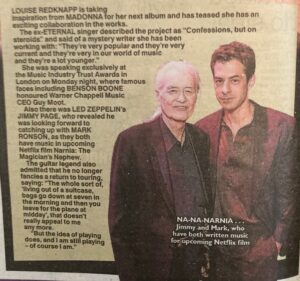
Jimmy Page at Music Industry Trust Awards last Monday…
As reported in The Sun newspaper on November 11…
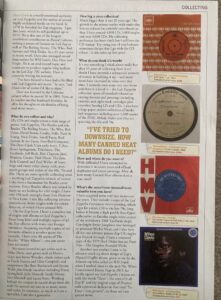
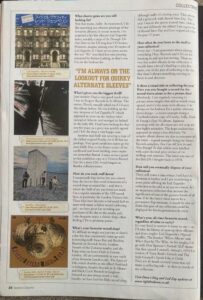
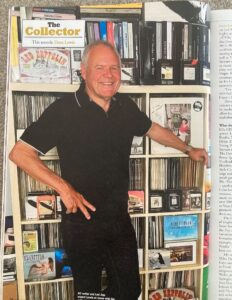
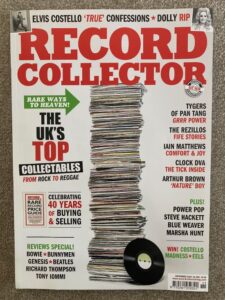
Here’s The Collector column I was featured in for month’s Record Collector magazine…
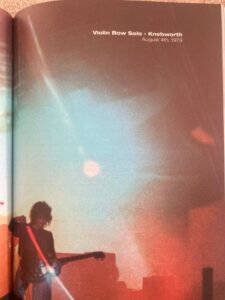
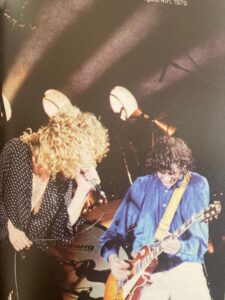
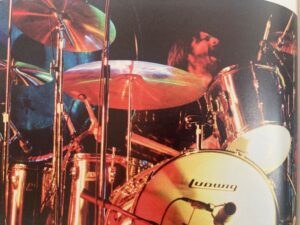
Alan Perry RIP…
I was very sad to hear the passing of the great photographer Alan Perry.
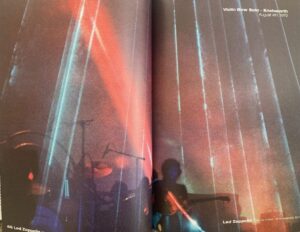
Alan took many a photo of countless bands in the 1970s and 1980s. He often advertised in the back pages of the music press and that was where I first got in touch with him. He had some fantastic colour shots of Led Zeppelin at Knebworth. I purchased a fair few of them. Many years later in 2009 when i was preparing my Then as it Was Led Zeppelin at Knebworth 1979 book I got back in touch with Alan. He supplied over 30 photos from his archive which added greatly to the visual appeal of the book. Alan was so generous and supportive of my efforts to chronicle this amazing period which he was right in front of the stage at – as he was so many gigs of that era.
He leaves behind an historical rock photo archive.
RIP Alan…
My thoughts on The Who By Numbers super deluxe box set…
—————————————————————————————————————
DL Diary Blog Update:


Wednesday November 4:
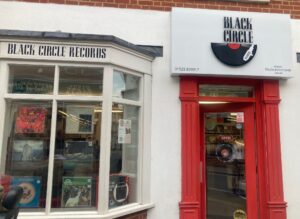
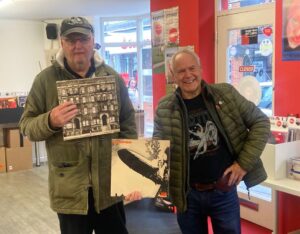
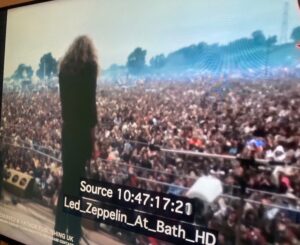
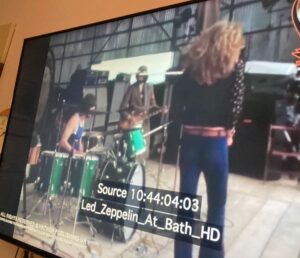
It was great to pay a visit to Mr Mark Harrison in Leighton Buzzard today. We called in to see main man David at the always excellent Black Circle Records UK and checked out the Led Zep albums ( we had them all!) and later went back to Mark’s and marvelled at the incredible Led Zeppelin at the Bath Festival 1970 YouTube footage – and I handed over a belated Birthday present to Mark of the excellent Yardbirds biography – we also FaceTimed the esteemed Brian Knapp the number one Zep memorabilia collector for a catch up – he gave me a brief tour of his Zep collection which is utterly awesome – there’s nothing like reveling in the world of Led Zeppelin with like minded comrades- and for me Mark and Brian are two of the most inspirational…keep rockin guys…!
Wednesday November 11:

It’s a Happy Birthday to our very good friend Mr. Billy Fletcher – Led Zep connoisseur, long time TBL supporter, ardent Glasgow Rangers fan and all round top man – Happy Birthday from Janet and I Billy – have a great day mate!
Until next time…
Dave Lewis – November 2026
TBL website updates written and compiled by Dave Lewis
Follow TBL/DL on Facebook:


Leave your response!